

Master’s Students of HSE, University of Campinas, and Tsinghua University Publish Joint Student Research Collection

Master’s students of the HSE ISSEK programme ‘Science, Technology and Innovation Management and Policy’ have released a joint research collection with the University of Campinas (Brazil) and Tsinghua University (China) titled ‘Being Innovative or Being on the Safe Side—Managing the Risk of Failure.’ The authors explore how organisations perceive risks and embrace innovation within different cultural contexts.
The publication brings together works by first-year master’s students, each representing an independent study on how organisations manage innovation and risk. The authors examine how corporate culture shapes the willingness to take risks, which motivation systems foster creativity, and how institutional environments influence innovative behaviour.
In her paper, HSE master’s student Aigul Zamaletdinova shows that companies can strike a balance between innovation and stability by using hybrid risk management methods—from machine learning and scenario modelling to weak signal analysis and building a culture of ‘psychological safety.’ She emphasises that it is the combination of technology, analytics, and a mature corporate culture that transforms risk into a source of competitive advantage.
Valery Novozemtsev studied Russian corporate culture and its influence on innovation. He concludes that the punishment of initiative remains one of the key barriers to developing an innovative economy. In his view, it is crucial to create motivation systems that encourage risk-taking and initiative rather than suppress them.
HSE master’s student Alena Bernyukevich explores the criteria for determining the ‘right level of risk’ for companies, stressing that innovation readiness must be aligned with an organisation’s strategic goals and culture.
The collection also includes research papers by students from partner universities in Brazil and China, offering a global perspective that takes into account cultural diversity.

Dirk Meissner
‘The uniqueness of the ISSEK master’s programme lies in its combination of theoretical depth and international research practice. For students, this is not merely an academic project but a genuine contribution to the global debate on the future of innovation—and they gain this opportunity as early as their first year of study,’ notes Dirk Meissner, Academic Supervisor of the Master’s programme in Science, Technology and Innovation Management and Policy and editor of the collection.
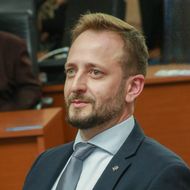
Gustavo Hermínio Salati Marcondes de Moraes
Dr Gustavo Hermínio Salati Marcondes de Moraes, Associate Professor at the University of Campinas, highlights that ‘the importance and value of this collection lie not only in its findings, but also in its mission to bring together the perspectives of three universities from three different countries. Knowledge grows richer when it is built through dialogue, diversity, and cross-border collaboration.’
This is the second collection of student research published jointly with international universities as part of the master’s programme. The initiative helps prepare students for careers at the intersection of research, innovation, and policy, offers valuable experience in collaborative research and publication, and strengthens intercultural academic ties.

See also:

HSE Students Among Winners of Yandex High-Tech Startup Accelerator
Yandex has announced the results of its Yandex AI Startup Lab accelerator, whose final round featured 12 IT projects. Over the course of three months, their creators—students and young entrepreneurs—worked alongside the company’s experts to develop their products. Four startups in digital marketing, medicine, and robotics were named the best, with their teams receiving cash prizes and cloud resource grants. Among them was Gradius, a startup founded by students from HSE University.
Researchers Find More Effective Approach to Revealing Majorana Zero Modes in Superconductors
An international team of researchers, including physicists from HSE MIEM, has demonstrated that nonmagnetic impurities can help more accurately reveal Majorana zero modes—quantum states considered promising building blocks for quantum computing. The researchers found that these impurities shift the energy levels that typically obscure the Majorana signal, while leaving the mode itself largely unaffected, thereby making its spectral peak more distinct. The study has been published in Research.
New Development by HSE Scientists Helps Design Reliable Electronics Faster at a Lower Cost
Scientists from HSE MIEM have developed a new approach to modelling electrothermal processes in high-power electronic circuits on printed circuit boards (PCB). The method allows engineers to quickly and accurately predict how electronic components heat up during operation, helping prevent overheating and potential failures. The results have been published in Russian Microelectronics.
HSE and Peking University Discuss Prospects for Expanding Cooperation
In Moscow, HSE University’s leadership met with a delegation from Peking University headed by its President, Gong Qihuang. During the meeting, the parties agreed to strengthen partnership between the two universities within the framework of the Cross Years of Russian–Chinese Cooperation in Education (2026–2027).
HSE and Nazarbayev University: Scientific and Educational Cooperation
In April 2026, HSE University welcomed an official delegation from Nazarbayev University. The visit primarily focused on establishing cooperation between the two universities, expanding partnership ties, and developing joint projects in support of strengthening bilateral relations between Russia and Kazakhstan.
‘Meet Professors, Gain Experience’: Uzbek Lyceum Students Undertake Placement at HSE
The fourth off-site school organised under the Lyceum Classes project has taken place with the support of HSE University and implemented by the HSE Department of Internationalisation. This year, 79 students from International House Tashkent and Interhouse Lyceum came to HSE. The programme includes an introduction to the university, the opportunity to attend classes, and tours around Moscow.
HSE Biologists Identify Factors That Accelerate Breast Cancer Recurrence
Scientists at HSE University have identified a molecular mechanism underlying aggressive breast cancer. They found that the signals supporting tumour growth originate not from the tumour itself but from its microenvironment. The researchers also demonstrated that reduced levels of the IGFBP6 protein in the tumour microenvironment lead to the accumulation of macrophages—immune cells associated with a higher risk of cancer recurrence. These findings already make it possible to assess patient risk more accurately and may, in the future, enable the development of drugs that target cells of the tumour microenvironment. The study has been published in Current Drug Therapy.
HSE University and Moscow DIT Partner to Advance 5G and 6G Networks
The Moscow Department of Information Technology and HSE University have signed a cooperation agreement in the field of innovative development of the capital’s IT infrastructure. The parties agreed on joint research into modern and promising communication technologies, including 5G and 6G, as well as AI, the Internet of Things, and other smart city technologies.
HSE University Presents Research Results at AI Conference in Oman
In April 2026, the International Conference on Intelligent Systems and Artificial Intelligence Applications (ISAA 2026) was held at the University of Nizwa in the Sultanate of Oman. The event was co-organised by HSE University, the University of Nizwa, and the University of Technology and Applied Sciences–Ibri. Researchers from HSE University were among the key speakers at the conference.
'What Impressed Me Most Was the Highly Active and Energetic Group of Students'
Sankha Basu, Assistant Professor at the Indraprastha Institute of Information Technology (IIIT-Delhi), taught a course at the Spring School 'Logic, Linguistics and Formal Philosophy' hosted by the International Laboratory for Logic, Linguistics and Formal Philosophy. This was his first visit to a Russian university, and he shared his impressions with the HSE News Service.