

Losing Money Multiple Times Causes Plastic Changes in the Brain
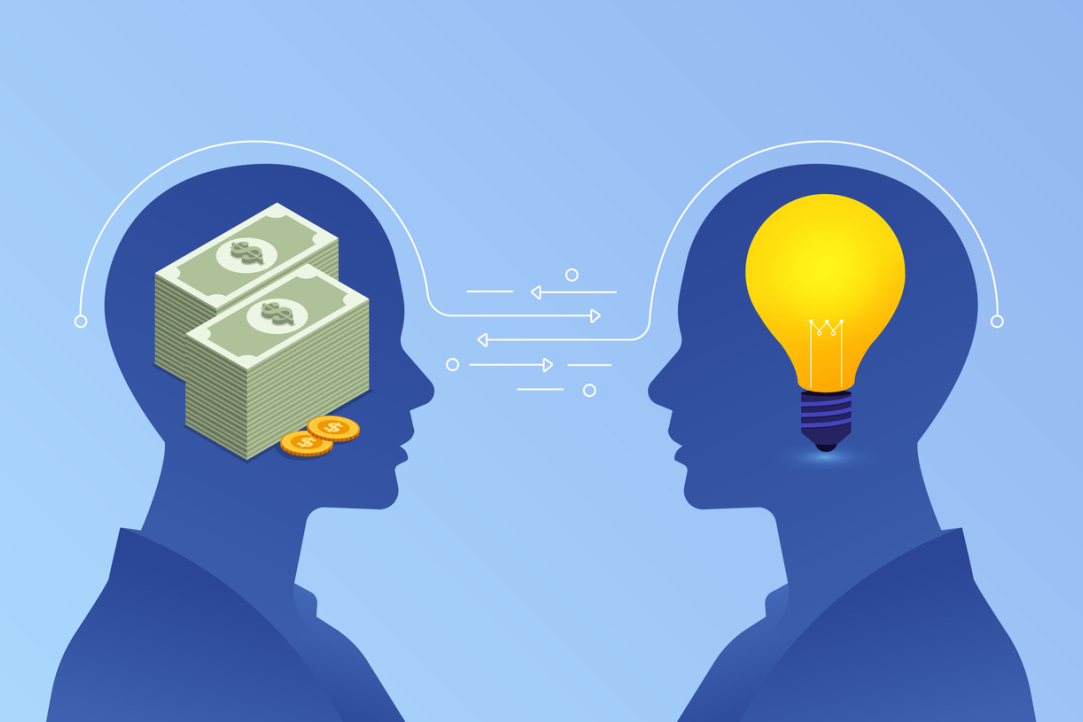
Researchers at the HSE Institute for Cognitive Neuroscience have shown experimentally that economic activity can actively change the brain. Signals that predict regular financial losses evoke plastic changes in the cortex. Therefore, these signals are processed by the brain more meticulously, which helps to identify such situations more accurately. The article was published in Scientific Reports.
The sight of an envelope from the tax authority, a falling currency rate, or a sad face of your chief accountant can mean impending financial troubles. How does the brain learn to recognize situations like this? Do these situations cause changes in brain function? These questions were studied by cognitive neuroscientists at HSE University using a popular economic game - the monetary incentive delay task (MID Task).
The MID Task requires that a person respond quickly to a signal that signals an opportunity to receive a reward or avoid a loss. It also allows you to divide brain mechanisms reward processing into separate stages: expectation of reward and learning.

Anna Shestakova,
Chief Research Fellow, Director, Centre for Cognition & Decision Making
We hypothesized that, like the plastic changes in the brain during the learning of a second language or playing a musical instrument, similar neuroplastic changes occur for certain signals that are associated with important economic outcomes. For example, the sound of a slot machine can for a long time be associated with a big win or loss while visiting a casino, which causes a particularly strong reaction in our brain in the future.
The subjects (29 people) took part in an economic game in which sound signals predicted losses of various sizes: the participants could lose between one and fifty-one monetary units in each round of the game. Participants had to quickly and accurately respond to audio signals to avoid monetary losses.
The study showed that participating in such a game leads to plastic changes in the auditory cortex of the brain, which begins to more accurately distinguish sounds that are associated with large financial losses. Moreover, scientists have demonstrated a link of this plastic change of the brain with the ‘learning signal’ generated by the human brain during performance of the MID Task. Subjects with a more pronounced neural ‘learning signal’ demonstrated stronger plastic changes in the nervous system.
The results of the experiment suggest that life's economic experience can lead to changes in the brain, which alters how external signals are perceived. Interestingly, the brain learns to identify important economic signals automatically. Moreover, scientists have shown precisely how this rewiring of the brain occurs and have demonstrated the role of individual differences in brain learning systems using the neurotransmitter dopamine.

Aleksey Gorin,
Junior Research Fellow, International Laboratory of Social Neurobiology
This is the first experimental evidence to show that economic activity can actively change the brain. Signals leading to financial losses evoke rather fast neuroplastic changes. Therefore, they are identified by the brain automatically, and do not require voluntary attention.
Aleksei Gorin
Junior Research Fellow, International Laboratory of Social Neurobiology
Anna Shestakova
Director, Centre for Cognition & Decision Making
See also:

Researchers Identify Link between Bilingualism and Cognitive Efficiency
An international team of researchers, including scholars from HSE University, has discovered that knowledge of a foreign language can improve memory performance and increase automaticity when solving complex tasks. The higher a person’s language proficiency, the stronger the effect. The results have been published in the journal Brain and Cognition.
‘Engagement in the Scientific Process’: HSE Launches Master’s Programme in Neurobiology
The HSE University Academic Council has elected to launch a new Master's programme in Neurobiology for students majoring in Biology. Students of the programme will have access to unique equipment and research groups, providing them with the knowledge and experience to pursue careers in science, medicine and pharmacy, IT and neurotechnology, and education and HR services.
Scientists Discover That the Brain Responds to Others’ Actions as if They Were Its Own
When we watch someone move their finger, our brain doesn’t remain passive. Research conducted by scientists from HSE University and Lausanne University Hospital shows that observing movement activates the motor cortex as if we were performing the action ourselves—while simultaneously ‘silencing’ unnecessary muscles. The findings were published in Scientific Reports.
Russian Scientists Investigate Age-Related Differences in Brain Damage Volume Following Childhood Stroke
A team of Russian scientists and clinicians, including Sofya Kulikova from HSE University in Perm, compared the extent and characteristics of brain damage in children who experienced a stroke either within the first four weeks of life or before the age of two. The researchers found that the younger the child, the more extensive the brain damage—particularly in the frontal and parietal lobes, which are responsible for movement, language, and thinking. The study, published in Neuroscience and Behavioral Physiology, provides insights into how age can influence the nature and extent of brain lesions and lays the groundwork for developing personalised rehabilitation programmes for children who experience a stroke early in life.
Scientists Uncover Why Consumers Are Reluctant to Pay for Sugar-Free Products
Researchers at the HSE Institute for Cognitive Neuroscience have investigated how 'sugar-free' labelling affects consumers’ willingness to pay for such products. It was found that the label has little impact on the products’ appeal due to a trade-off between sweetness and healthiness: on the one hand, the label can deter consumers by implying an inferior taste, while on the other, it signals potential health benefits. The study findings have been published in Frontiers in Nutrition.
Internal Clock: How Heart Rate and Emotions Shape Our Perception of Time
Our perception of time depends on heart rate—this is the conclusion reached by neuroscientists at HSE University. In their experiment, volunteers watched short videos designed to evoke specific emotions and estimated each video's duration, while researchers recorded their heart activity using ECG. The study found that the slower a participant's heart rate, the shorter they perceived the video to be—especially when watching unpleasant content. The study has been published in Frontiers in Psychology.
Scientists Develop New Method to Detect Motor Disorders Using 3D Objects
Researchers at HSE University have developed a new methodological approach to studying motor planning and execution. By using 3D-printed objects and an infrared tracking system, they demonstrated that the brain initiates the planning process even before movement begins. This approach may eventually aid in the assessment and treatment of patients with neurodegenerative diseases such as Parkinson’s. The paper has been published in Frontiers in Human Neuroscience.
HSE Scientists Test New Method to Investigate Mechanisms of New Word Acquisition
Researchers at the HSE Centre for Language and Brain were among the first to use transcranial alternating current stimulation to investigate whether it can influence the acquisition of new words. Although the authors of the experiment have not yet found a link between brain stimulation and word acquisition, they believe that adjusting the stimulation parameters may yield different results in the future. The study has been published in Language, Cognition and Neuroscience.
When Thoughts Become Movement: How Brain–Computer Interfaces Are Transforming Medicine and Daily Life
At the dawn of the 21st century, humans are increasingly becoming not just observers, but active participants in the technological revolution. Among the breakthroughs with the potential to change the lives of millions, brain–computer interfaces (BCIs)—systems that connect the brain to external devices—hold a special place. These technologies were the focal point of the spring International School ‘A New Generation of Neurointerfaces,’ which took place at HSE University.
How the Brain Responds to Prices: Scientists Discover Neural Marker for Price Perception
Russian scientists have discovered how the brain makes purchasing decisions. Using electroencephalography (EEG) and magnetoencephalography (MEG), researchers found that the brain responds almost instantly when a product's price deviates from expectations. This response engages brain regions involved in evaluating rewards and learning from past decisions. Thus, perceiving a product's value is not merely a conscious choice but also a function of automatic cognitive mechanisms. The results have been published in Frontiers in Human Neuroscience.