

HSE Researchers Discover Simple and Reliable Way to Understand How People Perceive Taste

A team of scientists from the HSE Centre for Cognition & Decision Making has studied how food flavours affect brain activity, facial muscles, and emotions. Using near-infrared spectroscopy (fNIRS), they demonstrated that pleasant food activates brain areas associated with positive emotions, while neutral food stimulates regions linked to negative emotions and avoidance. This approach offers a simpler way to predict the market success of products and study eating disorders. The study was published in the journal Food Quality and Preference.
How do we perceive taste? Why do some foods bring pleasure, while others evoke indifference or even aversion? Science has established that this is related to the activation of specific brain regions that process our perception of taste and emotions. For instance, sweet flavours can stimulate areas associated with pleasure, while bitter flavours activate regions responsible for alertness and defence against potential danger.
To investigate these processes, scientists traditionally use complex and expensive methods. Functional MRI (fMRI) is considered the most effective, as it allows researchers to ‘look inside’ the brain and observe which parts are activated by different tastes. However, such technologies require strict conditions: participants must remain motionless, which can interfere with the perception of food.
Researchers at HSE University successfully demonstrated how fNIRS can be used to study taste perception. This method is cheaper, easier to use, and allows participants to remain in a natural position, such as sitting at a table. However, fNIRS has rarely been applied to taste research, and its capabilities remain underexplored.
During the experiment, the scientists not only tested how effectively fNIRS captures brain responses to taste but also analysed how this activity is connected to other physiological processes. The researchers measured heart rate, skin response (electrodermal activity), and recorded facial muscle movements to obtain a comprehensive picture of how we react to the taste of food.

‘We tested the response to two types of food in 36 volunteers: pleasant (fruit puree) and neutral (vegetable puree). The choice of puree was deliberate: the soft texture helped avoid data distortion that could have arisen from chewing. As expected, the vegetable puree did not evoke excitement, but it would be incorrect to call it unpleasant food. If we rank all food, it falls into either pleasant or neutral categories. Truly “unpleasant” food, in essence, does not exist,’ explained Julia Eremenko, Research Fellow at the HSE Institute for Cognitive Neuroscience and one of the study’s authors.
Using a special fNIRS setup, the researchers targeted the insular cortex, a brain region deep within the temporal lobe responsible for taste perception. While fMRI is typically required to study this area, the modified fNIRS method enabled brain activity to be analysed with simpler equipment.
The researchers achieved significant progress in studying how the brain responds to food. One of the key accomplishments was the use of a specialised setup for near-infrared spectroscopy (fNIRS), which allowed them to focus on the insular cortex. This brain region, located deep within the temporal lobe, is responsible for taste perception. Typically, studying this area requires magnetic resonance imaging (MRI), but the modified fNIRS method enabled brain activity analysis using less complex equipment.
The results showed that pleasant food activated the insular cortex in the left hemisphere of the brain, which is associated with positive emotions and feelings of pleasure. Neutral flavours, on the other hand, activated the right precentral gyrus. This phenomenon is explained by interhemispheric asymmetry—a characteristic of brain function where each hemisphere processes different types of stimuli. The left hemisphere predominantly responds to positive emotions, while the right is associated with processing negative stimuli and avoidance reactions. Thus, the vegetable puree elicited unpleasant emotions in participants.
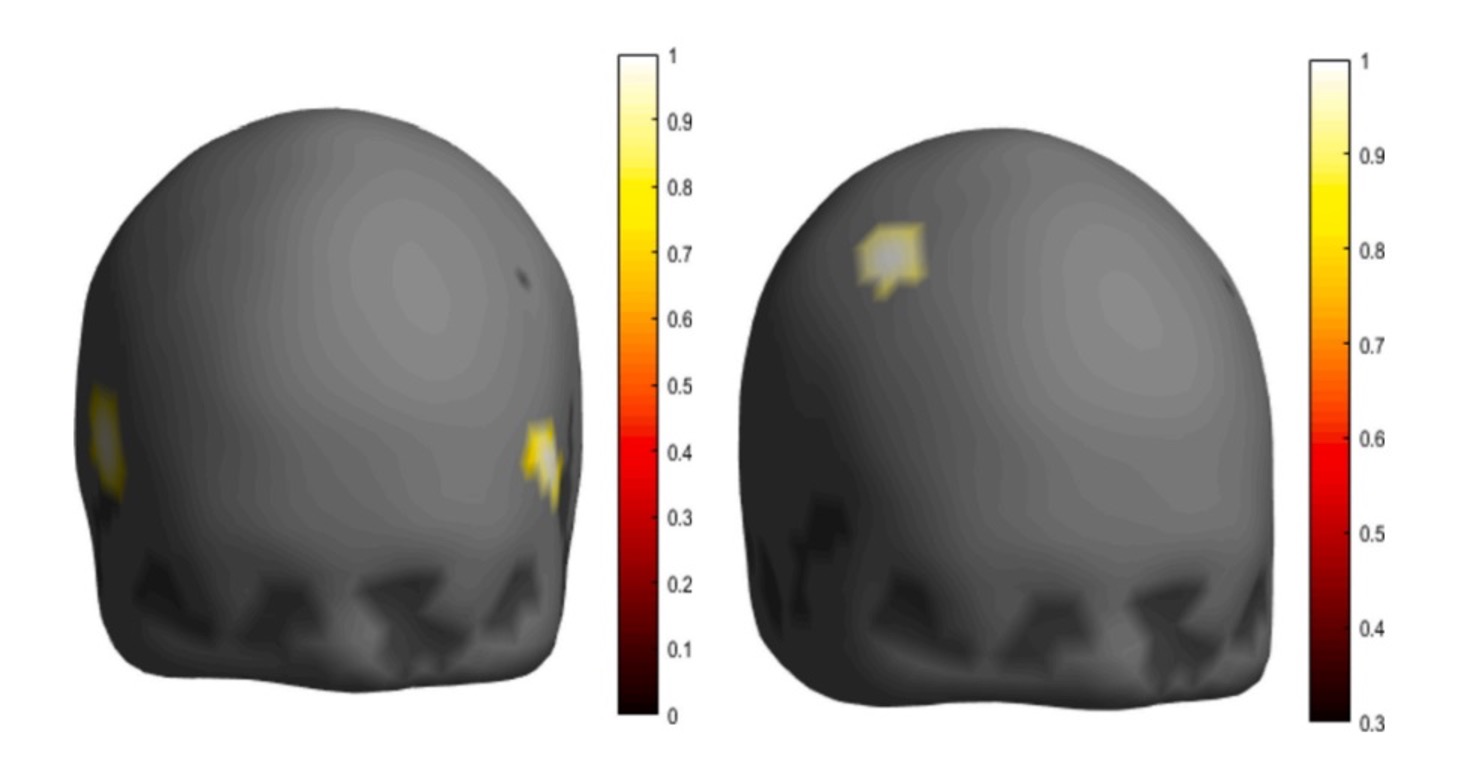
The researchers also recorded how food perception was reflected in the participants' facial expressions. Pleasant food activated the zygomaticus major muscle, responsible for smiling. In contrast, neutral food caused activation of the corrugator muscle, which furrows the brow before swallowing.
These physiological reactions are so reliable that they can be used to objectively assess taste preferences. Unlike verbal feedback, which can be subjective or insincere, facial reactions provide an honest indication of whether someone enjoys the food. Moreover, the method is simple and efficient: testing just 40–50 people is sufficient to draw conclusions. Such data can be valuable for food companies looking to improve their products.
‘We are actively studying how neurophysiological stimuli influence food perception. For instance, at our institute, we have developed a food delivery system integrated with neurophysiological equipment. This system is synchronised with experimental designs, allowing us to analyse the impact of packaging or price on taste perception. Additionally, my colleagues and I run a Rutube channel on neuromarketing where we share insights on how brain science can be used to effectively promote products and services, as well as to gain a deeper understanding of consumer motives and behaviour,’ explained Julia Eremenko.
The research was conducted as part of the strategic project 'Human Brain Resilience: Neurocognitive Technologies for Adaptation, Learning, Development and Rehabilitation in a Changing Environment' (‘Priority 2030’).
See also:

When a Virus Steps on a Mine: Ancient Mechanism of Infected Cell Self-Destruction Discovered
When a virus enters a cell, it disrupts the cell’s normal functions. It was previously believed that the cell's protective response to the virus triggered cellular self-destruction. However, a study involving bioinformatics researchers at HSE University has revealed a different mechanism: the cell does not react to the virus itself but to its own transcripts, which become abnormally long. The study has been published in Nature.
Researchers Identify Link between Bilingualism and Cognitive Efficiency
An international team of researchers, including scholars from HSE University, has discovered that knowledge of a foreign language can improve memory performance and increase automaticity when solving complex tasks. The higher a person’s language proficiency, the stronger the effect. The results have been published in the journal Brain and Cognition.
Artificial Intelligence Transforms Employment in Russian Companies
Russian enterprises rank among the world’s top ten leaders in AI adoption. In 2023, nearly one-third of domestic companies reported using artificial intelligence. According to a new study by Larisa Smirnykh, Professor at the HSE Faculty of Economic Sciences, the impact of digitalisation on employment is uneven: while the introduction of AI in small and large enterprises led to a reduction in the number of employees, in medium-sized companies, on the contrary, it contributed to job growth. The article has been published in Voprosy Ekonomiki.
Lost Signal: How Solar Activity Silenced Earth's Radiation
Researchers from HSE University and the Space Research Institute of the Russian Academy of Sciences analysed seven years of data from the ERG (Arase) satellite and, for the first time, provided a detailed description of a new type of radio emission from near-Earth space—the hectometric continuum, first discovered in 2017. The researchers found that this radiation appears a few hours after sunset and disappears one to three hours after sunrise. It was most frequently observed during the summer months and less often in spring and autumn. However, by mid-2022, when the Sun entered a phase of increased activity, the radiation had completely vanished—though the scientists believe the signal may reappear in the future. The study has been published in the Journal of Geophysical Research: Space Physics.
‘Engagement in the Scientific Process’: HSE Launches Master’s Programme in Neurobiology
The HSE University Academic Council has elected to launch a new Master's programme in Neurobiology for students majoring in Biology. Students of the programme will have access to unique equipment and research groups, providing them with the knowledge and experience to pursue careers in science, medicine and pharmacy, IT and neurotechnology, and education and HR services.
Banking Crises Drive Biodiversity Loss
Economists from HSE University, MGIMO University, and Bocconi University have found that financial crises have a significant negative impact on biodiversity and the environment. This relationship appears to be bi-directional: as global biodiversity declines, the likelihood of new crises increases. The study examines the status of populations encompassing thousands of species worldwide over the past 50 years. The article has been published in Economics Letters, an international journal.
Scientists Discover That the Brain Responds to Others’ Actions as if They Were Its Own
When we watch someone move their finger, our brain doesn’t remain passive. Research conducted by scientists from HSE University and Lausanne University Hospital shows that observing movement activates the motor cortex as if we were performing the action ourselves—while simultaneously ‘silencing’ unnecessary muscles. The findings were published in Scientific Reports.
Russian Scientists Investigate Age-Related Differences in Brain Damage Volume Following Childhood Stroke
A team of Russian scientists and clinicians, including Sofya Kulikova from HSE University in Perm, compared the extent and characteristics of brain damage in children who experienced a stroke either within the first four weeks of life or before the age of two. The researchers found that the younger the child, the more extensive the brain damage—particularly in the frontal and parietal lobes, which are responsible for movement, language, and thinking. The study, published in Neuroscience and Behavioral Physiology, provides insights into how age can influence the nature and extent of brain lesions and lays the groundwork for developing personalised rehabilitation programmes for children who experience a stroke early in life.
Scientists Test Asymmetry Between Matter and Antimatter
An international team, including scientists from HSE University, has collected and analysed data from dozens of experiments on charm mixing—the process in which an unstable charm meson oscillates between its particle and antiparticle states. These oscillations were observed only four times per thousand decays, fully consistent with the predictions of the Standard Model. This indicates that no signs of new physics have yet been detected in these processes, and if unknown particles do exist, they are likely too heavy to be observed with current equipment. The paper has been published in Physical Review D.
HSE Scientists Reveal What Drives Public Trust in Science
Researchers at HSE ISSEK have analysed the level of trust in scientific knowledge in Russian society and the factors shaping attitudes and perceptions. It was found that trust in science depends more on everyday experience, social expectations, and the perceived promises of science than on objective knowledge. The article has been published in Universe of Russia.