

HSE in India: ‘Cooperation Is Formed by the Development of Live Communication Between People’
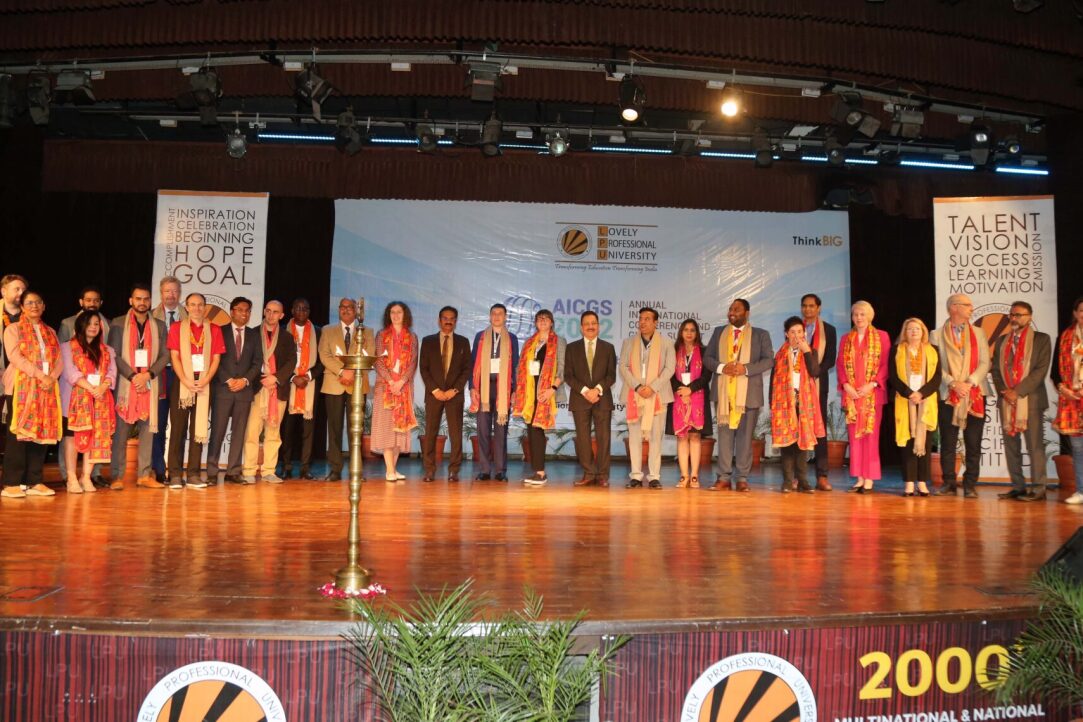
HSE University is taking part in the Annual International Conference and Global Summit (AICGS-2023), which began in Phagwara, India, on October 30. This year’s topic of discussion was the new model of international cooperation in the field of sustainable development, as well as the prospects and global challenges faced by universities in the development of international ties today.
The summit is organised by Lovely Professional University (LPU) and held at its campus. Leading universities from 12 countries are taking part in the event, with Russia being represented by HSE University and ITMO University. LPU is one of the largest private universities in India, and is located in the city of Phagwara in the northern state of Punjab. The university is a partner of HSE University.
The summit programme includes panel discussions, guest lectures, talks with students studying on exchange programmes abroad, and a range of events aimed at introducing guests to the culture and customs of India. There are also plans for separate meetings between the deans of faculties in the fields of sociology, design, management, and business.
During the trip, the Russian delegation will also visit the Indian Institute of Management Indore, Delhi University, and Indira Gandhi Delhi Technical University for Women.

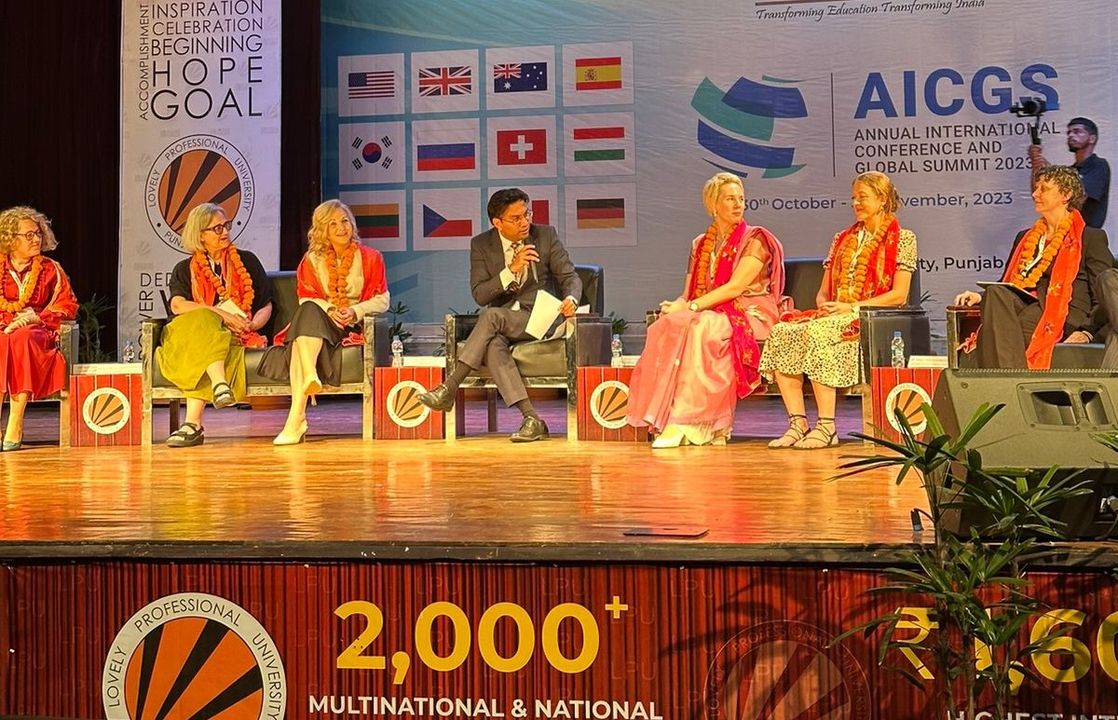
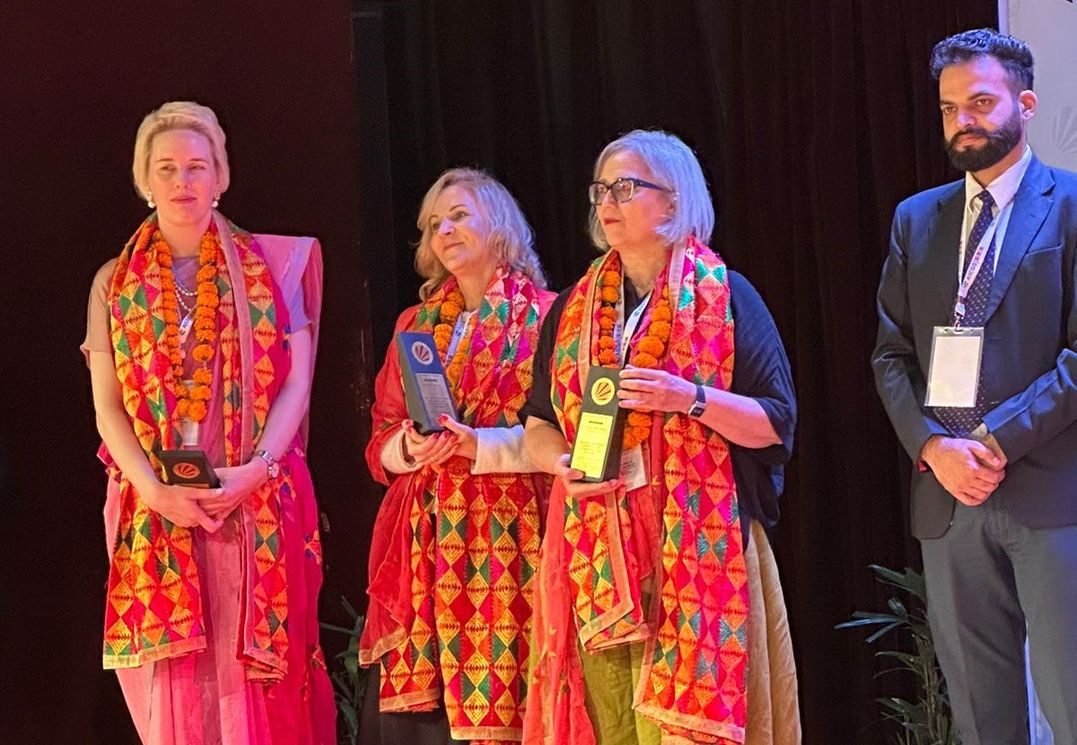

The HSE University delegation at AICGS-2023 is led by Anna Tyshetskaya, Director of HSE University-St Petersburg, who noted that this is not the university’s first trip to India. ‘Every time, our Indian colleagues open up new opportunities for cooperation with us,’ she said. ‘For example, students of HSE University-St Petersburg are taking part in a unique project organised by LPU: filming a documentary about India and its customs, student life, and education system.’
According to Anna Tyshetskaya, the international university community today understands that cooperation is not measured in terms of the number of exchange students, but rather ‘is formed by the development of live communication between people, which leads to such unique projects.’
Students of the Bachelor’s in Media Communications and the Master’s in Media Production and Media Analysis at HSE University-St Petersburg are taking part in an internship at LPU from October 28 to November 9, 2023. The main goal of the internship is to exchange knowledge and experience in the sphere of media and education. The project will culminate in the creation of a documentary about India filmed by students of HSE University and LPU. The HSE News Service previously reported on the project in detail here.
See also:

When a Virus Steps on a Mine: Ancient Mechanism of Infected Cell Self-Destruction Discovered
When a virus enters a cell, it disrupts the cell’s normal functions. It was previously believed that the cell's protective response to the virus triggered cellular self-destruction. However, a study involving bioinformatics researchers at HSE University has revealed a different mechanism: the cell does not react to the virus itself but to its own transcripts, which become abnormally long. The study has been published in Nature.
Researchers Identify Link between Bilingualism and Cognitive Efficiency
An international team of researchers, including scholars from HSE University, has discovered that knowledge of a foreign language can improve memory performance and increase automaticity when solving complex tasks. The higher a person’s language proficiency, the stronger the effect. The results have been published in the journal Brain and Cognition.
Lost Signal: How Solar Activity Silenced Earth's Radiation
Researchers from HSE University and the Space Research Institute of the Russian Academy of Sciences analysed seven years of data from the ERG (Arase) satellite and, for the first time, provided a detailed description of a new type of radio emission from near-Earth space—the hectometric continuum, first discovered in 2017. The researchers found that this radiation appears a few hours after sunset and disappears one to three hours after sunrise. It was most frequently observed during the summer months and less often in spring and autumn. However, by mid-2022, when the Sun entered a phase of increased activity, the radiation had completely vanished—though the scientists believe the signal may reappear in the future. The study has been published in the Journal of Geophysical Research: Space Physics.
‘Cities Are Key Actors of Interaction in the Global Arena’
The HSE Faculty of Urban and Regional Development (FURD) and India’s leading research centre, the Observer Research Foundation (ORF), have agreed to strengthen their partnership comprehensively in the study and analysis of urban development across BRICS countries. In addition, students and experts from Russia and India will take part in joint academic events and research projects.
Banking Crises Drive Biodiversity Loss
Economists from HSE University, MGIMO University, and Bocconi University have found that financial crises have a significant negative impact on biodiversity and the environment. This relationship appears to be bi-directional: as global biodiversity declines, the likelihood of new crises increases. The study examines the status of populations encompassing thousands of species worldwide over the past 50 years. The article has been published in Economics Letters, an international journal.
Scientists Discover That the Brain Responds to Others’ Actions as if They Were Its Own
When we watch someone move their finger, our brain doesn’t remain passive. Research conducted by scientists from HSE University and Lausanne University Hospital shows that observing movement activates the motor cortex as if we were performing the action ourselves—while simultaneously ‘silencing’ unnecessary muscles. The findings were published in Scientific Reports.
HSE Scientists Reveal What Drives Public Trust in Science
Researchers at HSE ISSEK have analysed the level of trust in scientific knowledge in Russian society and the factors shaping attitudes and perceptions. It was found that trust in science depends more on everyday experience, social expectations, and the perceived promises of science than on objective knowledge. The article has been published in Universe of Russia.
IDLab: Fascinating Research, Tough Deadlines, and Academic Drive
The International Laboratory of Intangible-driven Economy (IDLab) was established at the HSE campus in Perm 11 years ago. Its expertise in data processing and analysis allows researchers to combine fundamental studies with applied projects, including the development of risk and cybersecurity models for Sber. The head of the laboratory, Professor Petr Parshakov, and Senior Research Fellow Professor Mariya Molodchik spoke to the HSE News Service about IDLab’s work.
HSE Lecturers Awarded Yandex ML Prize 2025
The Yandex ML Prize is awarded to lecturers and heads of educational programmes who contribute to the development of artificial intelligence in Russia. This year, 10 laureates were selected from 300 applicants, including three members of the HSE Faculty of Computer Science (FCS). A special Hall of Fame award was also presented for contributions to the establishment of machine learning as an academic field. One of the recipients was Dmitry Vetrov, Research Professor at the HSE FCS.
Eighth International U4U Online Seminar Unites Experts from 14 Countries
The HSE Online Campus hosted a two-day international U4U (Universities for Universities) seminar, which traditionally serves as a platform for exchanging expertise in online learning. This year, the event has reached a global scale, attracting international experts and representatives of universities from around the world. Together, they discussed key challenges and strategies for the development of online education. The online meeting was held in mid-November.