

HSE Develops Its Own MLOps Platform

HSE researchers have developed an MLOps platform called SmartMLOps. It has been created for artificial intelligence researchers who wish to transform their invention into a fully-fledged service. In the future, the platform may host AI assistants to simplify educational processes, provide medical support, offer consultations, and solve a wide range of other tasks. Creators of AI technologies will be able to obtain a ready-to-use service within just a few hours. Utilising HSE’s supercomputer, the service can be launched in just a few clicks.
Many researchers working in AI development lack sufficient experience in building web services, managing distributed computing resources, system administration, information security, and deployment process automation. SmartMLOps was created to help eliminate the need to learn additional technologies and to address issues of repeatability and reproducibility in machine learning experiments.
The project partners include the HSE AI Research Centre, the School of Software Engineering at the HSE Faculty of Computer Science, and the HSE Tikhonov Moscow Institute of Electronics and Mathematics (MIEM). Experienced and highly qualified HSE specialists are involved in the development and deployment of the MLOps platform.
According to the project lead, Hadi Saleh, the platform is already undergoing pilot testing. Its primary goal is to reduce the time and resources required to deliver product-level services. SmartMLOps ensures the necessary level of reliability, security, and transparency in the use of AI technologies. It allows developers to save time on non-core activities such as system administration, DevOps, and CI/CD. The platform provides a unified graphical interface through which users can create a repository with an AI module template, access models, a monitoring system, orchestrators, and the supercomputer, as well as track their services’ metrics and promptly address issues.
To create a multifunctional, user-friendly, and modern service, the platform’s developers tackled the complex challenge of integrating HSE’s cHARISMa supercomputer cluster into cloud computing. The platform is based on a microservice architecture, with the main component being a framework developed by the HSE AI Research Centre.
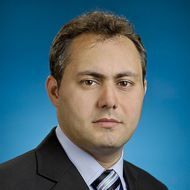
Hadi Saleh
‘The platform's functionality includes the creation, storage, versioning, training and fine-tuning of AI models; the deployment of ready-made models as product services with REST APIs; the construction of training pipelines; the monitoring of services and the overall state of computing resources; the ability to use data from HSE’s corporate information systems; and access to cloud storage and supercomputer resources. The framework itself and the first AI modules have already been deployed, and analytical dashboards for monitoring the platform’s status have been implemented. A special autoscaling technology was developed and introduced to save resources,’ said Hadi Saleh.
Unlike commercial solutions such as Amazon SageMaker or Google AI, SmartMLOps is primarily aimed at researchers and students at HSE. To gain access, they simply need to submit an application and await approval. Until the end of 2025, anyone interested may take part in the platform's pilot use.
A special ETL process was developed to securely extract and anonymise information from HSE’s corporate systems. This helps in analysing student behaviour and building predictive models, for example, to forecast career prospects.

Elena Kozhina
‘We expect that the implementation of the SmartMLOps system will mark a significant milestone in accelerating the development of AI-based services at our university,’ noted Elena Kozhina, Deputy Vice Rector and project curator.
At present, eight AI models have been deployed on the platform, and integration has been carried out with three of HSE’s corporate information systems. Two subsystems of the MLOps platform, developed with the involvement of specialists from the Faculty of Computer Science and MIEM, have been registered with the Russian Federal Service for Intellectual Property (Rospatent).

Sergey Lebedev
‘The development of such an ambitious and promising infrastructure project posed a considerable challenge and a timely necessity for the university. SmartMLOps enables the simultaneous solution of research, educational, and administrative tasks of various scales and levels. We managed to form a unique team of professionals and involve students and research assistants in the process,’ said Sergey Lebedev, Head of the School of Software Engineering at the HSE Faculty of Computer Science.

Anton Sergeev
Anton Sergeev, Director of the Centre for Software Development and Digital Services at HSE MIEM, emphasised that systematic work with AI models is impossible without MLOps platforms, which support the full lifecycle of models—from data import and cleaning to controlling the outcomes. ‘Such high-tech projects set a benchmark for AI leadership not only within our university, but across the country as a whole. They represent HSE’s scientific excellence in the form of a system that will assist ML specialists in applying AI models to a wide range of real-world problems,’ he said.

Pavel Kostenetskiy
Pavel Kostenetskiy, Head of the Supercomputer Modelling Unit, gave the service high praise. ‘The MLOps platform will make it easier for HSE researchers working in AI to access the ‘cHARISMa’ supercomputing cluster and will lower the entry threshold into high-performance computing. In a sense, HSE’s supercomputer will appear like a cloud within this MLOps platform, which many will find convenient,’ concluded Pavel Kostenetskiy.
See also:

When a Virus Steps on a Mine: Ancient Mechanism of Infected Cell Self-Destruction Discovered
When a virus enters a cell, it disrupts the cell’s normal functions. It was previously believed that the cell's protective response to the virus triggered cellular self-destruction. However, a study involving bioinformatics researchers at HSE University has revealed a different mechanism: the cell does not react to the virus itself but to its own transcripts, which become abnormally long. The study has been published in Nature.
Researchers Identify Link between Bilingualism and Cognitive Efficiency
An international team of researchers, including scholars from HSE University, has discovered that knowledge of a foreign language can improve memory performance and increase automaticity when solving complex tasks. The higher a person’s language proficiency, the stronger the effect. The results have been published in the journal Brain and Cognition.
Artificial Intelligence Transforms Employment in Russian Companies
Russian enterprises rank among the world’s top ten leaders in AI adoption. In 2023, nearly one-third of domestic companies reported using artificial intelligence. According to a new study by Larisa Smirnykh, Professor at the HSE Faculty of Economic Sciences, the impact of digitalisation on employment is uneven: while the introduction of AI in small and large enterprises led to a reduction in the number of employees, in medium-sized companies, on the contrary, it contributed to job growth. The article has been published in Voprosy Ekonomiki.
Lost Signal: How Solar Activity Silenced Earth's Radiation
Researchers from HSE University and the Space Research Institute of the Russian Academy of Sciences analysed seven years of data from the ERG (Arase) satellite and, for the first time, provided a detailed description of a new type of radio emission from near-Earth space—the hectometric continuum, first discovered in 2017. The researchers found that this radiation appears a few hours after sunset and disappears one to three hours after sunrise. It was most frequently observed during the summer months and less often in spring and autumn. However, by mid-2022, when the Sun entered a phase of increased activity, the radiation had completely vanished—though the scientists believe the signal may reappear in the future. The study has been published in the Journal of Geophysical Research: Space Physics.
Banking Crises Drive Biodiversity Loss
Economists from HSE University, MGIMO University, and Bocconi University have found that financial crises have a significant negative impact on biodiversity and the environment. This relationship appears to be bi-directional: as global biodiversity declines, the likelihood of new crises increases. The study examines the status of populations encompassing thousands of species worldwide over the past 50 years. The article has been published in Economics Letters, an international journal.
Scientists Discover That the Brain Responds to Others’ Actions as if They Were Its Own
When we watch someone move their finger, our brain doesn’t remain passive. Research conducted by scientists from HSE University and Lausanne University Hospital shows that observing movement activates the motor cortex as if we were performing the action ourselves—while simultaneously ‘silencing’ unnecessary muscles. The findings were published in Scientific Reports.
HSE Scientists Reveal What Drives Public Trust in Science
Researchers at HSE ISSEK have analysed the level of trust in scientific knowledge in Russian society and the factors shaping attitudes and perceptions. It was found that trust in science depends more on everyday experience, social expectations, and the perceived promises of science than on objective knowledge. The article has been published in Universe of Russia.
HSE Seeks New Ideas for AI Agents: Initiative Competition Launched
HSE University is inviting researchers and lecturers to present concepts for new digital products based on artificial intelligence. The best projects will receive expert and technological support. Applications are open until December 19, 2025.
Final of International Yandex–HSE Olympiad in AI and Data Analysis Held at HSE University
Yandex Education and the HSE Faculty of Computer Science have announced the results of the international AIDAO (Artificial Intelligence and Data Analysis Olympiad) competition. Students from 14 countries took part. For the second year in a row, first place went to the team AI Capybara, which developed the most accurate AI model for an autonomous vehicle vision system.
AI Lingua Included in Compilation of Best International AI Practices in Higher Education
HSE University has been acknowledged internationally for its pioneering efforts in integrating artificial intelligence into higher education. The AI Lingua Neural Network developed at HSE was included in the renowned international collection ‘The Global Development of AI-Empowered Higher Education: Beyond the Horizon.’ The compilation was prepared by the Institute of Education (IOE) of Tsinghua University with the support of the Ministry of Education of the People's Republic of China and a global advisory committee, which included experts from Oxford, UCL, Sorbonne, Stanford, and other leading academic centres.