

HSE and Integration Education Centre to Develop New Programmes for Agrobiotech Advancement
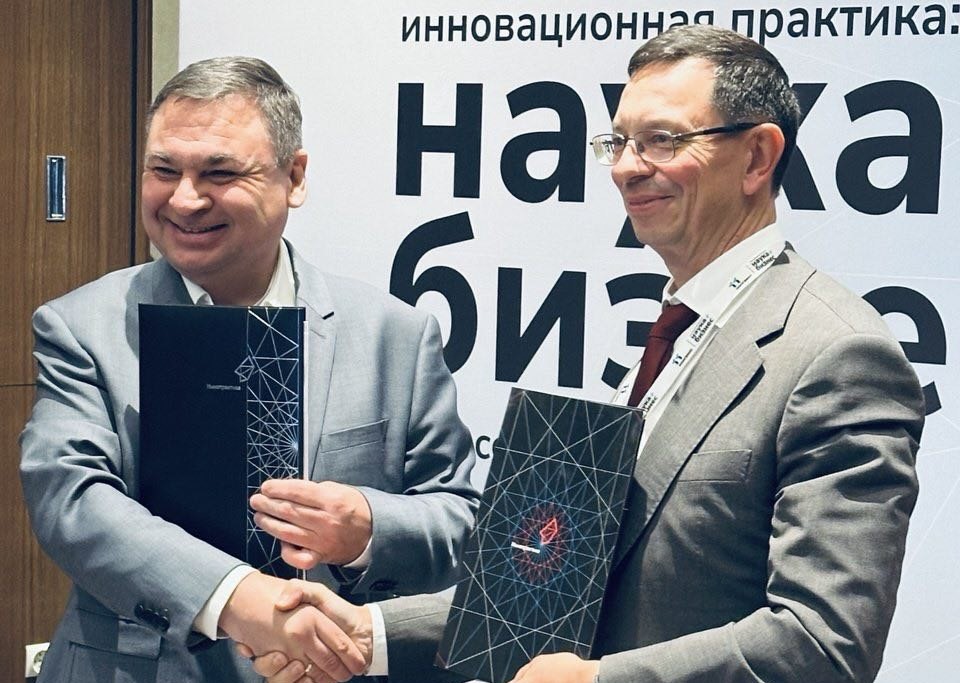
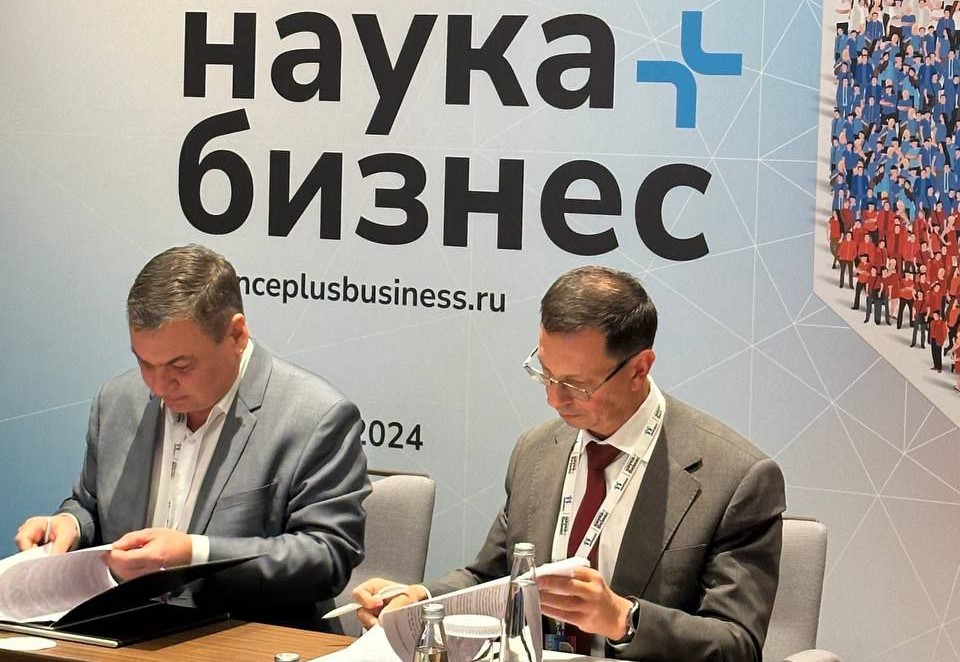
HSE University and ANO Integration plan to jointly develop projects aimed at creating new approaches to education and advancing innovative agrobiotechnologies. The parties signed the corresponding agreement at the XI Congress ‘Innovative Practice: Science Plus Business.’
One area of collaboration between HSE and ANO Integration (Autonomous Non-profit Organisation ‘Integration Education Development Centre’) will focus on advancing agricultural education. The parties intend to develop and customise master's programmes in genetics and breeding while working on establishing a unified pre-university agricultural education system to address the workforce crisis in the agricultural sector and ensure sustainable rural development.
Additionally, the organisations agreed to support agricultural universities participating in the Ministry of Science and Higher Education of Russia's ‘Priority 2030’ and ‘Advanced Engineering Schools’ programmes. These universities will prepare strategic projects aimed at creating critical technologies for the agricultural sector. The projects include developing new genetic technologies, biologising plant and animal production, and introducing digital solutions for agriculture.
‘Given the importance of innovation and technology for the agricultural sector, our university has long set goals to expand research activities in this field and to train modern professionals for the domestic agricultural sector at a fundamentally new level, with qualifications at the intersection of various technologies. We hope that the combination of HSE's scientific expertise, advanced educational standards, and achievements in innovative technologies with the experience of our colleagues at Integration in reforming agricultural education will help us create conditions for our agriculture to successfully respond to the challenges of the new era,’ said HSE Rector Nikita Anisimov.
‘HSE University possesses exceptional research and educational competencies that are now reaching the agricultural sector. Our collaboration aims to train specialists for the agricultural sector and develop innovative agrotechnologies capable of replacing foreign solutions and strengthening Russia's food security,’ commented Vladimir Avdeenko, General Director of ANO Integration.
See also:

When a Virus Steps on a Mine: Ancient Mechanism of Infected Cell Self-Destruction Discovered
When a virus enters a cell, it disrupts the cell’s normal functions. It was previously believed that the cell's protective response to the virus triggered cellular self-destruction. However, a study involving bioinformatics researchers at HSE University has revealed a different mechanism: the cell does not react to the virus itself but to its own transcripts, which become abnormally long. The study has been published in Nature.
Researchers Identify Link between Bilingualism and Cognitive Efficiency
An international team of researchers, including scholars from HSE University, has discovered that knowledge of a foreign language can improve memory performance and increase automaticity when solving complex tasks. The higher a person’s language proficiency, the stronger the effect. The results have been published in the journal Brain and Cognition.
Lost Signal: How Solar Activity Silenced Earth's Radiation
Researchers from HSE University and the Space Research Institute of the Russian Academy of Sciences analysed seven years of data from the ERG (Arase) satellite and, for the first time, provided a detailed description of a new type of radio emission from near-Earth space—the hectometric continuum, first discovered in 2017. The researchers found that this radiation appears a few hours after sunset and disappears one to three hours after sunrise. It was most frequently observed during the summer months and less often in spring and autumn. However, by mid-2022, when the Sun entered a phase of increased activity, the radiation had completely vanished—though the scientists believe the signal may reappear in the future. The study has been published in the Journal of Geophysical Research: Space Physics.
Banking Crises Drive Biodiversity Loss
Economists from HSE University, MGIMO University, and Bocconi University have found that financial crises have a significant negative impact on biodiversity and the environment. This relationship appears to be bi-directional: as global biodiversity declines, the likelihood of new crises increases. The study examines the status of populations encompassing thousands of species worldwide over the past 50 years. The article has been published in Economics Letters, an international journal.
Scientists Discover That the Brain Responds to Others’ Actions as if They Were Its Own
When we watch someone move their finger, our brain doesn’t remain passive. Research conducted by scientists from HSE University and Lausanne University Hospital shows that observing movement activates the motor cortex as if we were performing the action ourselves—while simultaneously ‘silencing’ unnecessary muscles. The findings were published in Scientific Reports.
HSE Scientists Reveal What Drives Public Trust in Science
Researchers at HSE ISSEK have analysed the level of trust in scientific knowledge in Russian society and the factors shaping attitudes and perceptions. It was found that trust in science depends more on everyday experience, social expectations, and the perceived promises of science than on objective knowledge. The article has been published in Universe of Russia.
IDLab: Fascinating Research, Tough Deadlines, and Academic Drive
The International Laboratory of Intangible-driven Economy (IDLab) was established at the HSE campus in Perm 11 years ago. Its expertise in data processing and analysis allows researchers to combine fundamental studies with applied projects, including the development of risk and cybersecurity models for Sber. The head of the laboratory, Professor Petr Parshakov, and Senior Research Fellow Professor Mariya Molodchik spoke to the HSE News Service about IDLab’s work.
HSE Lecturers Awarded Yandex ML Prize 2025
The Yandex ML Prize is awarded to lecturers and heads of educational programmes who contribute to the development of artificial intelligence in Russia. This year, 10 laureates were selected from 300 applicants, including three members of the HSE Faculty of Computer Science (FCS). A special Hall of Fame award was also presented for contributions to the establishment of machine learning as an academic field. One of the recipients was Dmitry Vetrov, Research Professor at the HSE FCS.
HSE University and Banking and Finance Academy of Uzbekistan Sign Memorandum on Scientific Cooperation
The partnership aims to foster academic collaboration in the fields of global economics, sustainable development, and Islamic finance. Strengthening academic ties with Uzbekistan represents a promising direction for scientific exchanges and the implementation of international projects in sustainable development.
HSE Scientists Optimise Training of Generative Flow Networks
Researchers at the HSE Faculty of Computer Science have optimised the training method for generative flow neural networks to handle unstructured tasks, which could make the search for new drugs more efficient. The results of their work were presented at ICLR 2025, one of the world’s leading conferences on machine learning. The paper is available at Arxiv.org.