

‘The Goal of the Spring into ML School Is to Unite Young Scientists Engaged in Mathematics of AI’
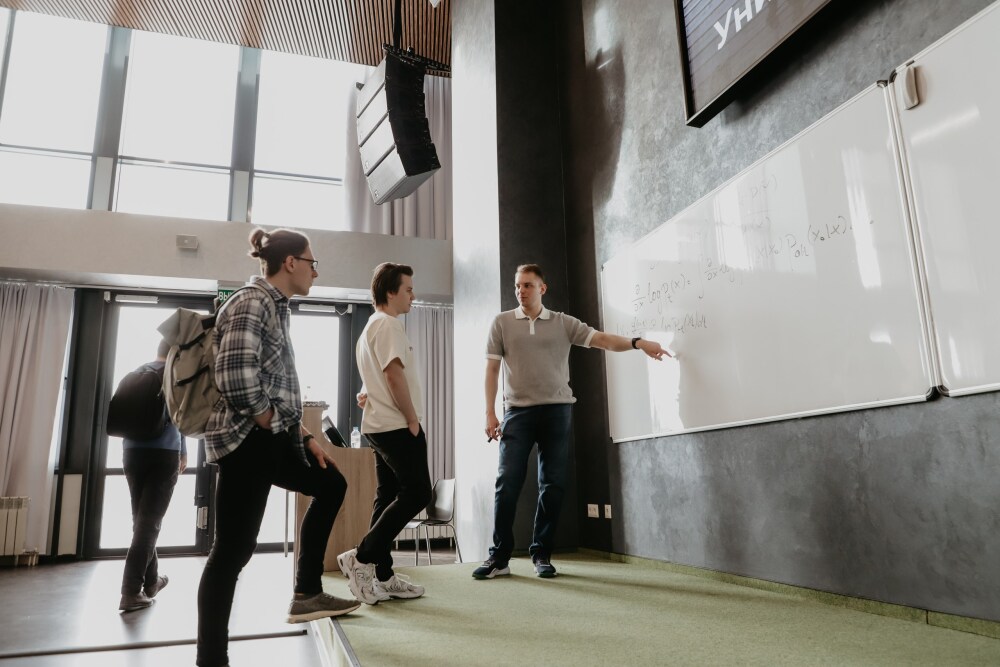
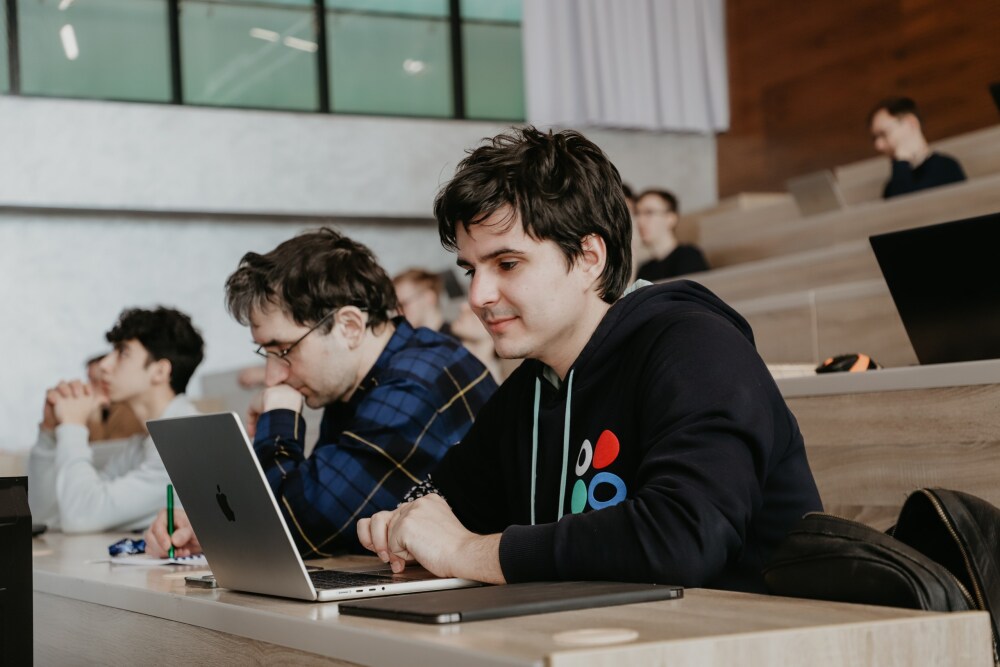


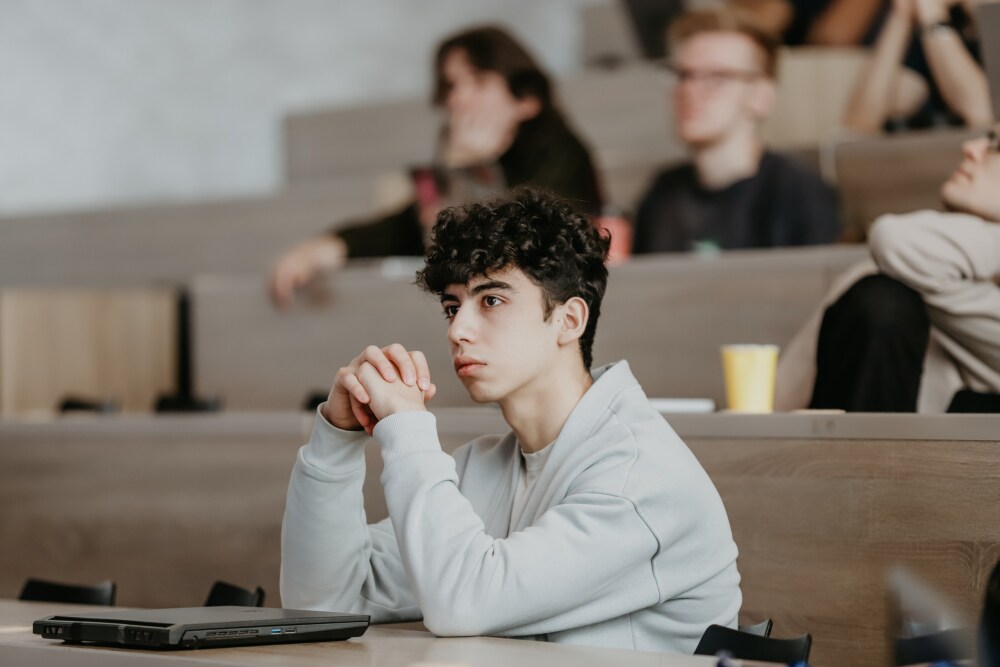

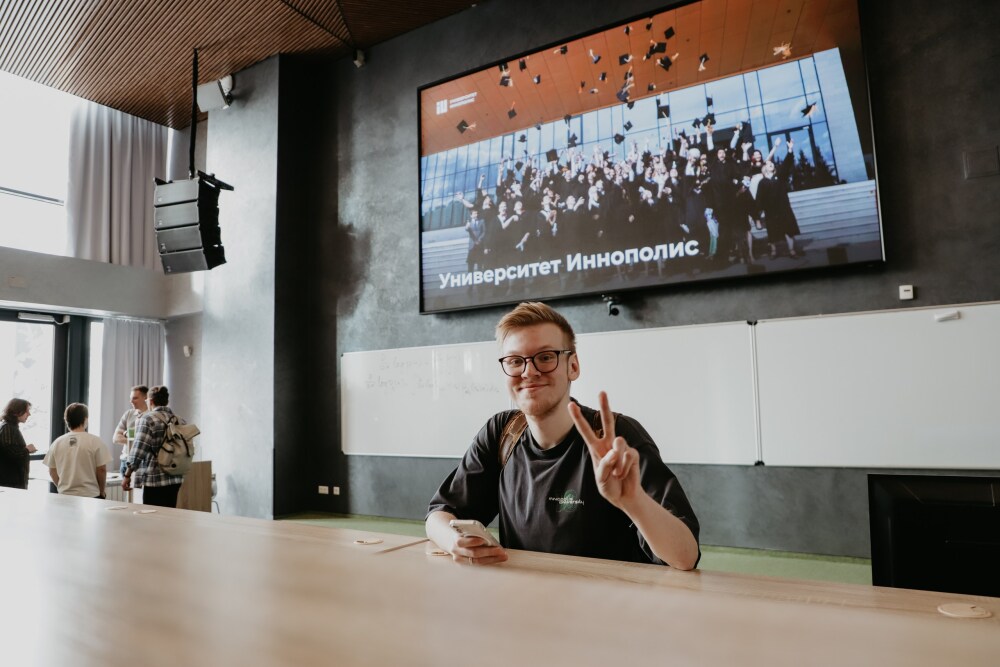
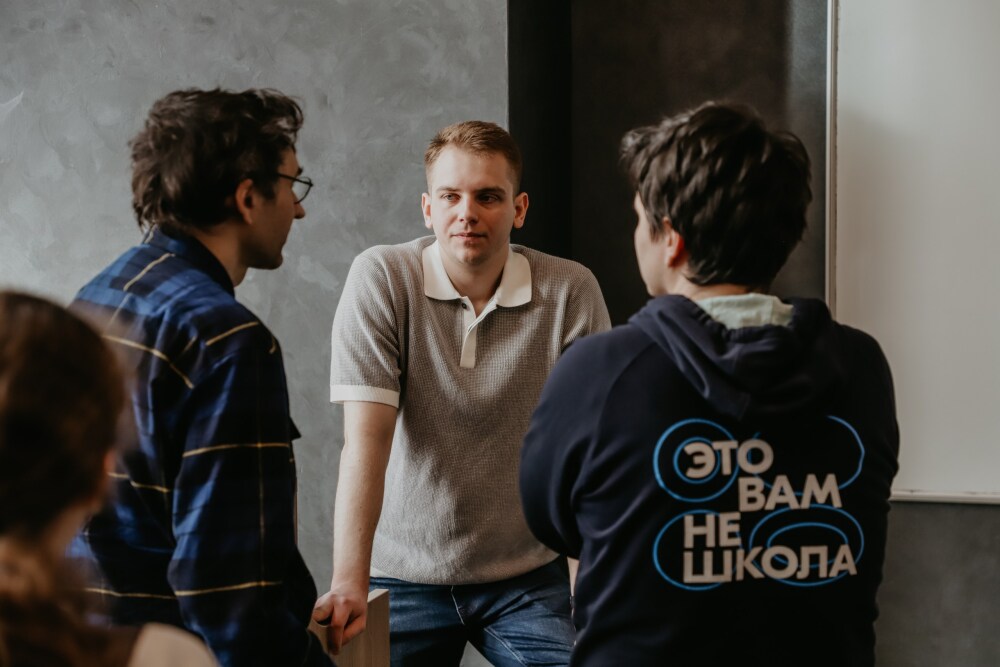

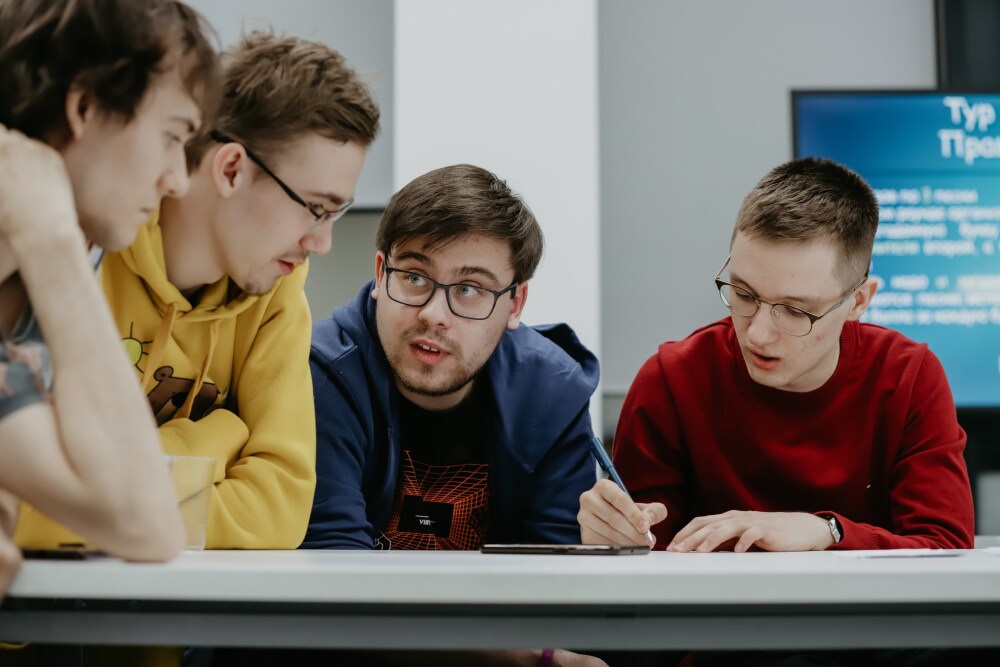
The AI and Digital Science Institute at the HSE Faculty of Computer Science and Innopolis University organised a week-long programme for students, doctoral students, and young scientists on the application of mathematics in machine learning and artificial intelligence. Fifty participants of Spring into ML attended 24 lectures on machine learning, took part in specific pitch sessions, and completed two mini-courses on diffusion models—a developing area of AI for data generation.
The main topics of the scientific presentations were reinforcement learning, generative, and diffusion models.
Alexander Gasnikov, Rector of Innopolis University
‘The distinctive features of the Spring into ML school are its youthfulness and the strong fundamental component of scientific presentations. All lectures and talks were given by young scientists and researchers for equally active students, and most of the presentations were based on mathematics. It is wonderful that our university, which is one of the research centres in the field of artificial intelligence in Russia, became the venue for this scientific event.’
The published presentations (in Russian) can be found here.
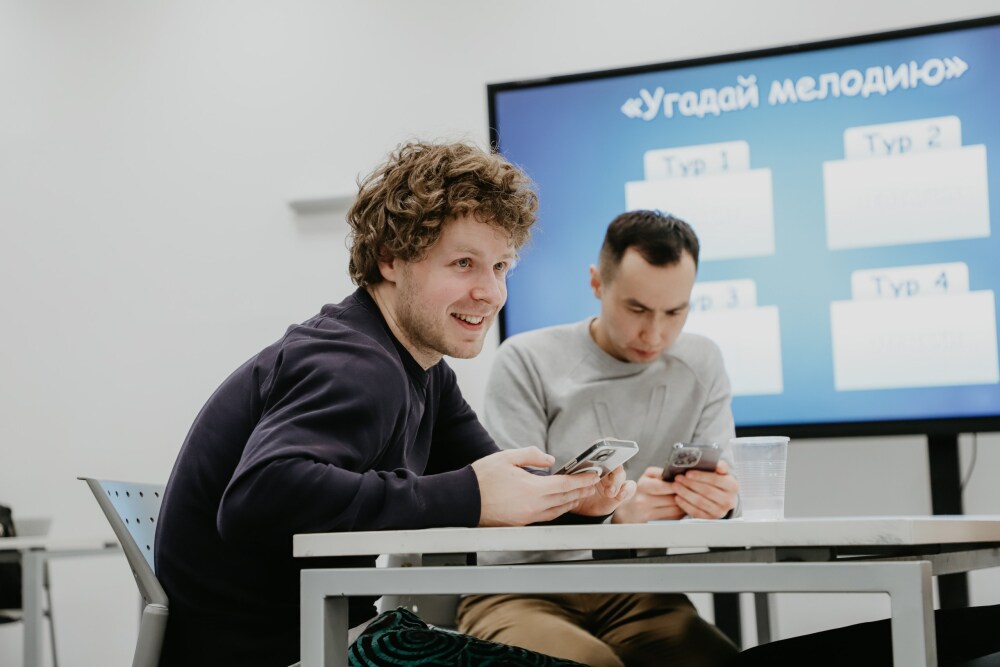
The school programme also included such games as Name That Tune and What? Where? When?, movie screenings, excursions to Kazan, Sviyazhsk, and other networking events.

Alexey Naumov, Director for Basic Research at the AI and Digital Science Institute at the HSE Faculty of Computer Science
‘The goal of the Spring into ML school is to unite young scientists engaged in mathematics of AI. As a result of school discussions, several interesting projects emerged with the intersection of participants' competencies, which could lay the foundation for potential publications at A* conferences.’

Petr Mokrov, Skoltech (Skolkovo Institute of Science and Technology), participant of the Spring into ML School
‘The format and organisation of the school turned out to be suitable for such events. There are very few academic research groups in Russia working on machine learning and artificial intelligence. The participants know each other well, many became friends, but often they do not actually understand what their colleagues in adjacent teams are working on. Throughout the week spent in Innopolis, students, doctoral students, and academic supervisors communicated and exchanged experience, discussed their tasks, and addressed issues arising at the intersection between research directions. I found myself among like-minded people. And it was great.’
According to the organisers of the event from HSE and Innopolis University, the Spring into ML school can become a regular platform for discussion and exchange of experience among scientists and will launch a series of events in Russian IT universities dedicated to the mathematical foundations of artificial intelligence.
Innopolis University specialises in education, research, and development in the field of information technology and robotics. The Russian IT university collaborates with 297 industrial partners. The university's portfolio includes 114 projects for companies such as Gazprom, Aeroflot, KAMAZ, Norilsk Nickel, Rosseti, RusHydro, Severstal, and others. At Innopolis, there are 1,239 students from 35 countries as well as 152 scientific and pedagogical employees from 15 countries with working experience in leading world universities and IT companies.
See also:

Artificial Intelligence Transforms Employment in Russian Companies
Russian enterprises rank among the world’s top ten leaders in AI adoption. In 2023, nearly one-third of domestic companies reported using artificial intelligence. According to a new study by Larisa Smirnykh, Professor at the HSE Faculty of Economic Sciences, the impact of digitalisation on employment is uneven: while the introduction of AI in small and large enterprises led to a reduction in the number of employees, in medium-sized companies, on the contrary, it contributed to job growth. The article has been published in Voprosy Ekonomiki.
HSE Seeks New Ideas for AI Agents: Initiative Competition Launched
HSE University is inviting researchers and lecturers to present concepts for new digital products based on artificial intelligence. The best projects will receive expert and technological support. Applications are open until December 19, 2025.
Final of International Yandex–HSE Olympiad in AI and Data Analysis Held at HSE University
Yandex Education and the HSE Faculty of Computer Science have announced the results of the international AIDAO (Artificial Intelligence and Data Analysis Olympiad) competition. Students from 14 countries took part. For the second year in a row, first place went to the team AI Capybara, which developed the most accurate AI model for an autonomous vehicle vision system.
AI Lingua Included in Compilation of Best International AI Practices in Higher Education
HSE University has been acknowledged internationally for its pioneering efforts in integrating artificial intelligence into higher education. The AI Lingua Neural Network developed at HSE was included in the renowned international collection ‘The Global Development of AI-Empowered Higher Education: Beyond the Horizon.’ The compilation was prepared by the Institute of Education (IOE) of Tsinghua University with the support of the Ministry of Education of the People's Republic of China and a global advisory committee, which included experts from Oxford, UCL, Sorbonne, Stanford, and other leading academic centres.
Technological Breakthrough: Research by AI and Digital Science Institute Recognised at AI Journey 2025
Researchers from the AI and Digital Science Institute (part of the HSE Faculty of Computer Science) presented cutting-edge AI studies, noted for their scientific novelty and practical relevance, at the AI Journey 2025 International Conference. A research project by Maxim Rakhuba, Head of the Laboratory for Matrix and Tensor Methods in Machine Learning, received the AI Leaders 2025 award. Aibek Alanov, Head of the Centre of Deep Learning and Bayesian Methods, was among the finalists.
HSE University to Join Physical AI Garage Project by Yandex
Yandex is collaborating with leading Russian universities to launch a new educational programme called Physical AI Garage. This initiative unites five universities—HSE University, ITMO, MIPT, MAI, and MEPhI—to train future professionals in physical artificial intelligence by tackling real-world industrial challenges. The programme is free, and participants will receive scholarships.
HSE Scientists Optimise Training of Generative Flow Networks
Researchers at the HSE Faculty of Computer Science have optimised the training method for generative flow neural networks to handle unstructured tasks, which could make the search for new drugs more efficient. The results of their work were presented at ICLR 2025, one of the world’s leading conferences on machine learning. The paper is available at Arxiv.org.
Larger Groups of Students Use AI More Effectively in Learning
Researchers at the Institute of Education and the Faculty of Economic Sciences at HSE University have studied what factors determine the success of student group projects when they are completed with the help of artificial intelligence (AI). Their findings suggest that, in addition to the knowledge level of the team members, the size of the group also plays a significant role—the larger it is, the more efficient the process becomes. The study was published in Innovations in Education and Teaching International.
Quantity over Quality: How Publication Activity Leads to Crisis
Participants of the 4th Fall into ML conference at HSE University held a discussion titled ‘Academia in Crisis: What Does the Future Hold?’ In particular, they examined why the number of scientific publications continues to grow, what the quality of these papers is, what expectations should be placed on researchers, and what role artificial intelligence plays in preparing academic articles.
HSE Researchers Assess Creative Industry Losses from Use of GenAI
Speaking at the IPQuorum.Music forum on October 15, Leonid Gokhberg, HSE First Vice Rector, and Daniil Kudrin, an expert at the Centre for Industry and Corporate Projects of HSE ISSEK, presented the findings of the first study in Russia on the economic impact of GenAI on creative professions. The analysis shows that creators’ potential losses could reach one trillion roubles by 2030.