

Immune System Error: How Antibodies in Multiple Sclerosis Mistake Their Targets

Researchers at HSE University and the Institute of Bioorganic Chemistry of the Russian Academy of Sciences (IBCh RAS) have studied how the immune system functions in multiple sclerosis (MS), a disease in which the body's own antibodies attack its nerve fibres. By comparing blood samples from MS patients and healthy individuals, scientists have discovered that the immune system in MS patients can mistake viral proteins for those of nerve cells. Several key proteins have also been identified that could serve as new biomarkers for the disease and aid in its diagnosis. The study has been published in Frontiers in Immunology. The research was conducted with support from the Russian Science Foundation.
Multiple sclerosis (MS) is a disease in which the immune system mistakenly attacks the myelin sheath that surrounds nerve fibres. Myelin can be thought of like the insulation around electrical wires: when it deteriorates, signals between neurons are transmitted less effectively. This leads to difficulties with movement, vision, speech, and memory. The disease progresses in waves, with periods of exacerbation followed by remission; however, over time, the damage accumulates and may lead to disability. Diagnosing multiple sclerosis is challenging, as symptoms vary from patient to patient, and there are still no reliable biomarkers for a definitive diagnosis.
The causes of the immune system's malfunction are not yet fully understood, but scientists believe that viral infections may play a role. To gain deeper insight into the immune response in the disease, scientists from HSE University–St Petersburg and the Shemyakin–Ovchinnikov Institute of Bioorganic Chemistry of the Russian Academy of Sciences conducted a study comparing the antibodies of patients with multiple sclerosis to those of healthy individuals. The researchers used PhIP-Seq, a technology that identifies the antigens against which an individual already has antibodies.
Antigens are foreign molecules that trigger an immune response. They are found on the surfaces of bacteria, viruses, and other cells, prompting the immune system to respond by producing antibodies.
Antibodies are proteins produced by the immune system to combat antigens. Antibodies act like 'keys' that recognise and bind to 'locks'—antigens—in order to neutralise them or mark them for destruction by other immune cells.
PhIP-Seq not only identifies the antibodies but also determines which proteins they interact with. This enables the creation of a detailed profile of the immune response, revealing the specific targets the immune system is attacking.

Igor Eliseev
'We selected about a thousand proteins capable of triggering an autoimmune response and fragmented them into small overlapping peptides—short chains of amino acids that make up proteins. Using genetic engineering, these peptides were then displayed on bacteriophages, with each phage presenting a specific peptide on its surface,' explains Igor Eliseev, Academic Supervisor of the Computational Biology and Bioinformatics Master's programme at the HSE Campus in St Petersburg. 'The modified phages were then added to the patients’ blood samples. If antibodies in the blood recognised specific peptides, they bound to the phages, forming complexes. Next, we extracted these complexes and analysed which proteins triggered the immune response.'
PhIP-Seq helped identify autoantibodies—antibodies that mistakenly target the body’s own proteins. The scientists found that in MS patients, the immune system reacts particularly strongly to the SPTAN1 protein, which plays a crucial role in the structure of nerve cells, as well as to the viral protein LMP1, which is associated with the Epstein–Barr virus (EBV). In patients with aggressive forms of MS, the immune response was even broader, with cross-reactivity causing the immune system to attack both viral proteins and the body’s own tissues. Put simply, the immune system behaved as though it were confusing viral proteins with the body’s own proteins.
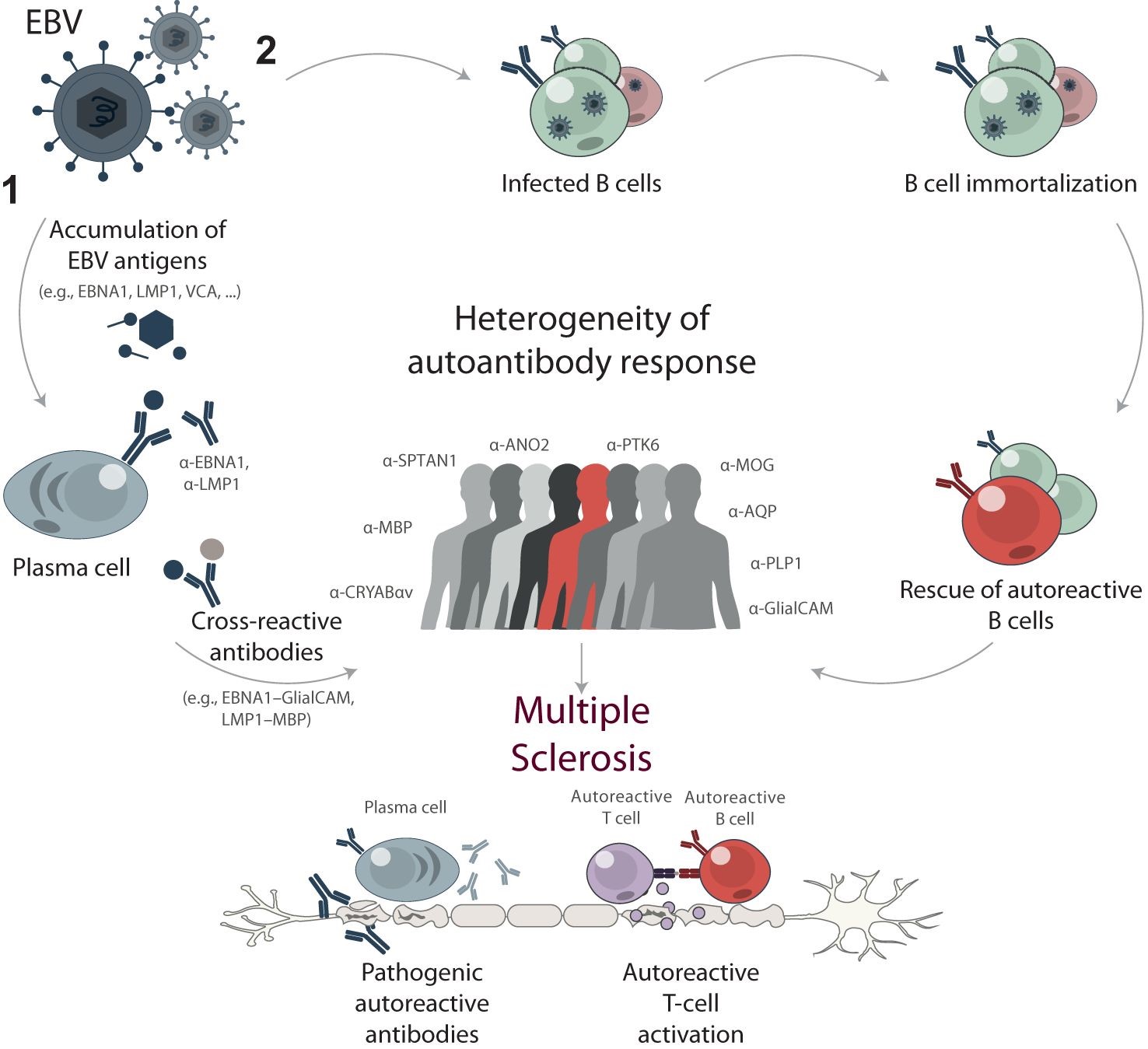
'Our study showed that autoimmune antibodies in multiple sclerosis respond to a broad range of proteins,' explains Yakov Lomakin, Project Head and Senior Research Fellow at IBCh RAS. 'This indicates reduced specificity: instead of precisely targeting one protein, the antibodies bind to various targets, making the immune response chaotic and destructive.'
During the experiment, the scientists tested whether a combination of several proteins could serve as a biomarker for the disease. They found that testing for four antigens—SPTAN1, PTK6, PRX (nervous system proteins), and LMP1 (an EBV protein)—can distinguish MS patients from healthy individuals with high accuracy. These findings can not only improve diagnosis but also pave the way for new treatment approaches, such as targeted therapies that block misguided immune responses.

See also:

‘Working with AI Solves a Wide Range of Engineering Problems’
Artificial intelligence is a working tool based on a balanced combination of algorithms and engineering. Experts and doctoral students from the HSE Moscow Institute of Electronics and Mathematics explain how AI technologies can improve an application, device, or system, and what engineering tasks are solved in the process.
‘The Peak of Stupidity’ and ‘The Valley of Despair’: HSE Economists Propose an Explanation for the Dunning–Kruger Effect
The Dunning–Kruger effect, which describes a sharp surge in self-confidence among beginners followed by an equally rapid decline as they gain experience, can be explained by the nature of the learning process and the acquisition of new knowledge. This conclusion was reached by Andrey Vorchik of the HSE Faculty of Economic Sciences together with independent researcher Murat Mamyshev. They developed a mathematical model of learning and demonstrated how subjective confidence is formed and changes as knowledge accumulates, as well as how teachers can reduce the ‘valley of despair’ experienced by learners.
Toffee and Risk: Scientists Discover Why People Who Crave Sweets Make More Impulsive Choices
Having a sweet tooth may be linked not only to eating habits but also to the way people make decisions. Researchers at HSE University have found that people with a preference for sweet foods tend to behave more impulsively—not because they want immediate rewards, but because they are less willing to tolerate uncertainty. These findings may help improve treatments for addiction. The study findings have been published in Frontiers in Psychology.
Advancing Collaboration: HSE Faculty of Computer Science and Harbin Institute of Technology Hold Joint Seminar
From July 13 to 16, 2026, the Faculty of Computer Science hosted the Russian–Sino Research Seminar on Machine Learning Applications, organised by the HSE Laboratory for Cloud and Mobile Technologies in partnership with the Harbin Institute of Technology (China). A delegation comprising seven students and three university representatives travelled to Moscow to take part in an intensive four-day programme.
Physicists Find a Way to Model Ion Parameters in Plasma in Seconds
Researchers from HSE University and the Moscow Institute of Physics and Technology (MIPT) have developed a set of simple analytical methods for calculating the properties of heavy ions in helium under the influence of a strong electric field. The new approach speeds up calculations of ion mobility and ion–molecule reaction rates by thousands of times while maintaining sufficient accuracy for plasma jet modelling. The findings have been published in the journal Physica Scripta.
A New Section on AI and a Prizewinning Paper: Early-Career HSE Researchers Take Part in IEEE EDM Conference
The 27th IEEE International Conference of Young Professionals in Electron Devices and Materials (EDM) has taken place in the Altai Republic. This year, researchers from HSE University presented the results of their research and were involved in organising a new section on artificial intelligence. A paper by HSE master’s student Rodion Sidorenko was awarded third place in the research paper competition at the conference.
Two Years of Growth or Decline: How to Choose an Investment Strategy
Economists from HSE University, together with colleagues from international universities, have analysed stock market movements over almost a century and proposed an investment strategy that could have delivered returns nearly twice as high as the market average. Their research suggests following a momentum strategy during periods of sustained market growth and switching to a value strategy after prolonged market declines. The study has been published in the Journal of Banking and Finance.
Researchers Reveal Link Between Attention and Communication Difficulties in Autism
Researchers at HSE University have examined how communication difficulties in children with autism are related to brain function. The findings show that not only language networks but also attention networks play an important role. The weaker the connections involved in maintaining focus and switching attention, the more pronounced communication difficulties were. The study has been published in European Child & Adolescent Psychiatry.
HSE Initiates Development of Ethical Standard for Anthropomorphic Robots
Beyond technological solutions, the development of anthropomorphic robotics also demands ethical ones. In July 2026, the HSE Institute for Robotics Systems hosted a foresight session dedicated to developing an Ethical Standard for Anthropomorphic Robotic Complexes. Representatives from businesses, government bodies, scientific organisations, and universities gathered to discuss key ethical and legal issues surrounding the development of anthropomorphic robotic complexes. The main outcome of the meeting was a draft of the Ethical Standard.
Scientists Discover Why Some People Wore Masks During COVID-19 While Others Did Not
Why do some people voluntarily follow new rules while others ignore them? Researchers at HSE University have found that the answer lies not so much in people's willingness to cooperate, as previously believed, but in their ability to empathise with others. Empathy proved to be the strongest predictor of whether people chose to wear face masks voluntarily during the COVID-19 pandemic. The findings have been published in Frontiers.