

'We’re Moving On to the Next Stage of Digital Transformation'
%20(1).jpg "'We’re Moving On to the Next Stage of Digital Transformation'")
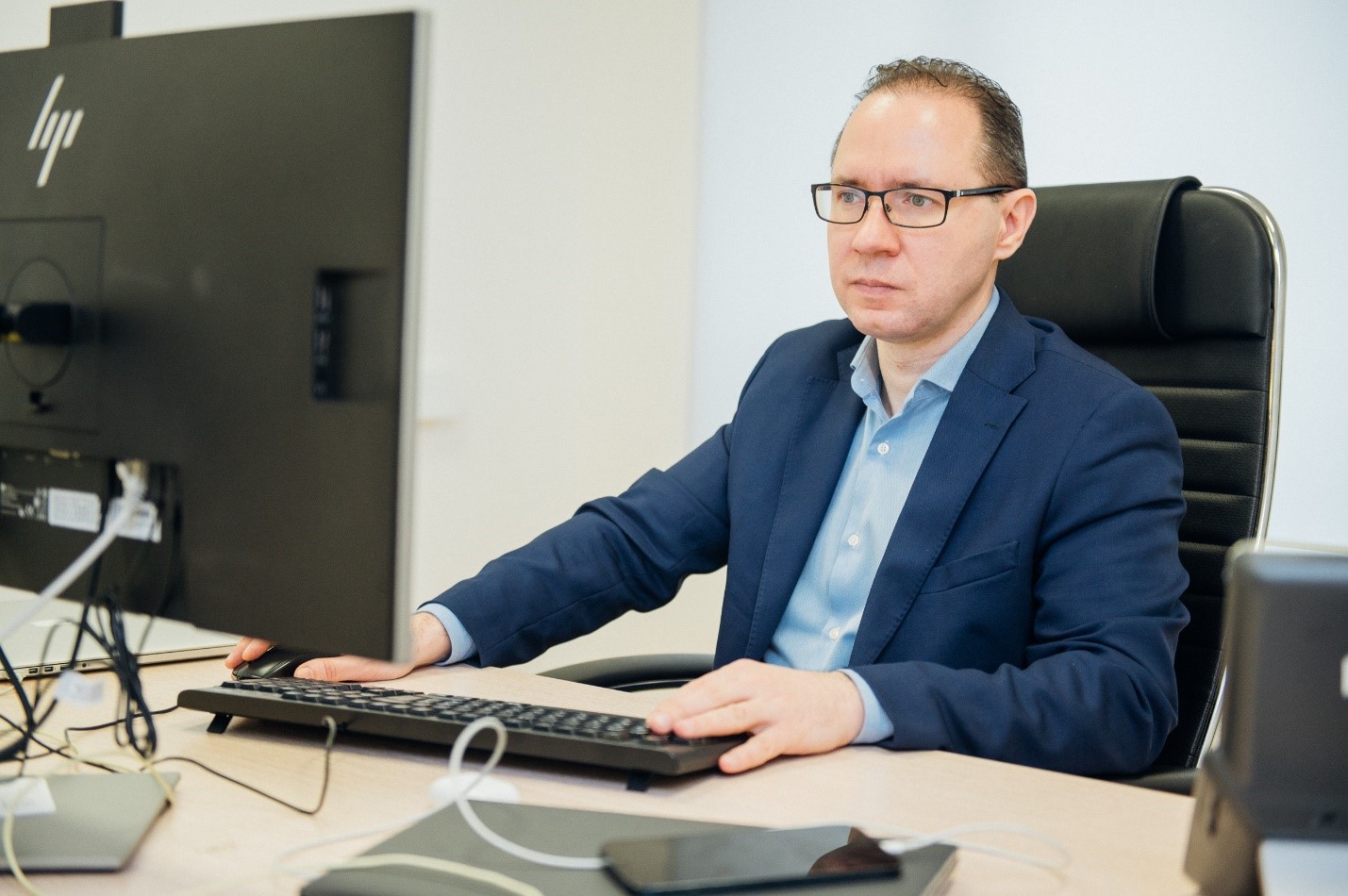
Dmitry Bondar has served as Senior Director for Digital Transformation at HSE University since January 2021. Since then, the university has introduced and developed numerous new, state-of-the-art information systems. Dmitry Bondar is responsible for ensuring high rates of digital transformation and the good performance of HSE's IT Office. In his interview, he speaks about the integration of new information systems, project management at the IT Office, import substitution in IT, engaging with students, and plans for the current year.
— HSE is a university committed to continually improving its digital environment. What new information systems have been launched in the past year?
— Currently, the university is working to automate its primary business processes in a comprehensive manner. In 2022, several teams collaborated to implement a number of systems, including those for managing admissions, engaging with partners, applicants and contractors, developing academic programmes, and handling procurement and financial accounting.
Our plans for this year include the implementation of several new foundational systems, such as HSE.Reg for managing student records, the Marketplace for educational products, MVP for continuing professional education, microdegree and online courses, the Joint Economic and Social Archive platform for consolidating research across various fields of science, and SmartPro, a system for automating students’ practical training. In fact, we are nearing completion of the comprehensive automation stage. This will stabilise the university's IT landscape, enabling us to advance to the next stage of digital transformation.
— What challenges do you anticipate the IT Office will encounter along the way?
— The previous stage was the most challenging one for the university. During that period, the new interfaces did not necessarily provide benefits for regular users; on the contrary, they could instead add complexity to their work. However, advancing to the next stage would have been impossible without the development and implementation of foundational information systems. The work ahead will be equally labour-intensive, but this time, the changes will have a more substantial impact on both the university's overall performance and individual users.
'We need to be pioneers in the implementation and application of domestically produced digital solutions'
— Import substitution in IT is a major priority for Russian universities today. What processes have been initiated at HSE in this regard and which ones do you anticipate will start shortly?
— Currently, the university is confronted with the unavailability of services and software from foreign manufacturers, coupled with an increase in legislative measures that require the use of domestic IT solutions. Often, we need to be pioneers in the implementation and application of domestically produced digital solutions in the educational process.
In January 2023, the IT Office uploaded a section to the HSE University's website with a list of digital services to be replaced by domestically developed solutions and the current status of their substitution
'Future human resources for the Digital Economy'
— The IT Office is a major employer. Can you tell us about your projects that aim to involve HSE students?
— Students are the most valuable resource of any university. We are particularly committed to engaging proactively with the student community.
For example, last summer, we launched the first enrolment in the IT Staff Development Programme. This internship programme offers students interested in pursuing digital professions an opportunity to start their careers in the IT industry. Students gain an insight into what it takes to practice their chosen IT profession, while also acquiring new competencies, knowledge, and skills in the field.
Based on the results of the pilot enrolment, two students were invited to join the IT Office team. We are currently conducting a second enrolment and looking forward to welcoming more talented students to the IT Office.
Another important project is the HSE University Digital Assistants. The project was initially launched to assist individuals who faced challenges in using digital technology during the pandemic.
Today, the Digital Assistants not only provide assistance and advice in Russian and English through the student-operated Hotline, but they also offer support during online events, work with digital product teams, and even provide digital support outside of the university
They collaborate with charitable foundations through digital volunteering, conduct masterclasses on digital literacy and culture, and provide support for major external online events. Moreover, digital volunteering opens up career opportunities: five students from various courses and programmes have joined the IT Office.
After gaining experience working with our team, many Digital Assistants have been hired by large IT companies. We are pleased to see our students as valuable human resources for the digital economy. We are committed to sharing our positive experience with other Russian universities through our university partnership programme. This will enable our colleagues to launch similar projects at their own institutions.
Our plans for the near future include the launch of a socially significant project called 'Supporting Digital Access to Education for People with Disabilities', which also involves the Student Council's Digitalisation Committee, Digital Assistants, and HSE students with disabilities. We still have a lot of work ahead of us to achieve our overall goals and to develop new ideas and plans for further advancing the university's digital environment.
See also:

When a Virus Steps on a Mine: Ancient Mechanism of Infected Cell Self-Destruction Discovered
When a virus enters a cell, it disrupts the cell’s normal functions. It was previously believed that the cell's protective response to the virus triggered cellular self-destruction. However, a study involving bioinformatics researchers at HSE University has revealed a different mechanism: the cell does not react to the virus itself but to its own transcripts, which become abnormally long. The study has been published in Nature.
Researchers Identify Link between Bilingualism and Cognitive Efficiency
An international team of researchers, including scholars from HSE University, has discovered that knowledge of a foreign language can improve memory performance and increase automaticity when solving complex tasks. The higher a person’s language proficiency, the stronger the effect. The results have been published in the journal Brain and Cognition.
Lost Signal: How Solar Activity Silenced Earth's Radiation
Researchers from HSE University and the Space Research Institute of the Russian Academy of Sciences analysed seven years of data from the ERG (Arase) satellite and, for the first time, provided a detailed description of a new type of radio emission from near-Earth space—the hectometric continuum, first discovered in 2017. The researchers found that this radiation appears a few hours after sunset and disappears one to three hours after sunrise. It was most frequently observed during the summer months and less often in spring and autumn. However, by mid-2022, when the Sun entered a phase of increased activity, the radiation had completely vanished—though the scientists believe the signal may reappear in the future. The study has been published in the Journal of Geophysical Research: Space Physics.
Banking Crises Drive Biodiversity Loss
Economists from HSE University, MGIMO University, and Bocconi University have found that financial crises have a significant negative impact on biodiversity and the environment. This relationship appears to be bi-directional: as global biodiversity declines, the likelihood of new crises increases. The study examines the status of populations encompassing thousands of species worldwide over the past 50 years. The article has been published in Economics Letters, an international journal.
Scientists Discover That the Brain Responds to Others’ Actions as if They Were Its Own
When we watch someone move their finger, our brain doesn’t remain passive. Research conducted by scientists from HSE University and Lausanne University Hospital shows that observing movement activates the motor cortex as if we were performing the action ourselves—while simultaneously ‘silencing’ unnecessary muscles. The findings were published in Scientific Reports.
HSE Scientists Reveal What Drives Public Trust in Science
Researchers at HSE ISSEK have analysed the level of trust in scientific knowledge in Russian society and the factors shaping attitudes and perceptions. It was found that trust in science depends more on everyday experience, social expectations, and the perceived promises of science than on objective knowledge. The article has been published in Universe of Russia.
IDLab: Fascinating Research, Tough Deadlines, and Academic Drive
The International Laboratory of Intangible-driven Economy (IDLab) was established at the HSE campus in Perm 11 years ago. Its expertise in data processing and analysis allows researchers to combine fundamental studies with applied projects, including the development of risk and cybersecurity models for Sber. The head of the laboratory, Professor Petr Parshakov, and Senior Research Fellow Professor Mariya Molodchik spoke to the HSE News Service about IDLab’s work.
HSE Lecturers Awarded Yandex ML Prize 2025
The Yandex ML Prize is awarded to lecturers and heads of educational programmes who contribute to the development of artificial intelligence in Russia. This year, 10 laureates were selected from 300 applicants, including three members of the HSE Faculty of Computer Science (FCS). A special Hall of Fame award was also presented for contributions to the establishment of machine learning as an academic field. One of the recipients was Dmitry Vetrov, Research Professor at the HSE FCS.
HSE University and Banking and Finance Academy of Uzbekistan Sign Memorandum on Scientific Cooperation
The partnership aims to foster academic collaboration in the fields of global economics, sustainable development, and Islamic finance. Strengthening academic ties with Uzbekistan represents a promising direction for scientific exchanges and the implementation of international projects in sustainable development.
HSE Scientists Optimise Training of Generative Flow Networks
Researchers at the HSE Faculty of Computer Science have optimised the training method for generative flow neural networks to handle unstructured tasks, which could make the search for new drugs more efficient. The results of their work were presented at ICLR 2025, one of the world’s leading conferences on machine learning. The paper is available at Arxiv.org.