

Healthy Nutrition Saves Public Funds: Strategies to Reduce Healthcare Costs in Russia
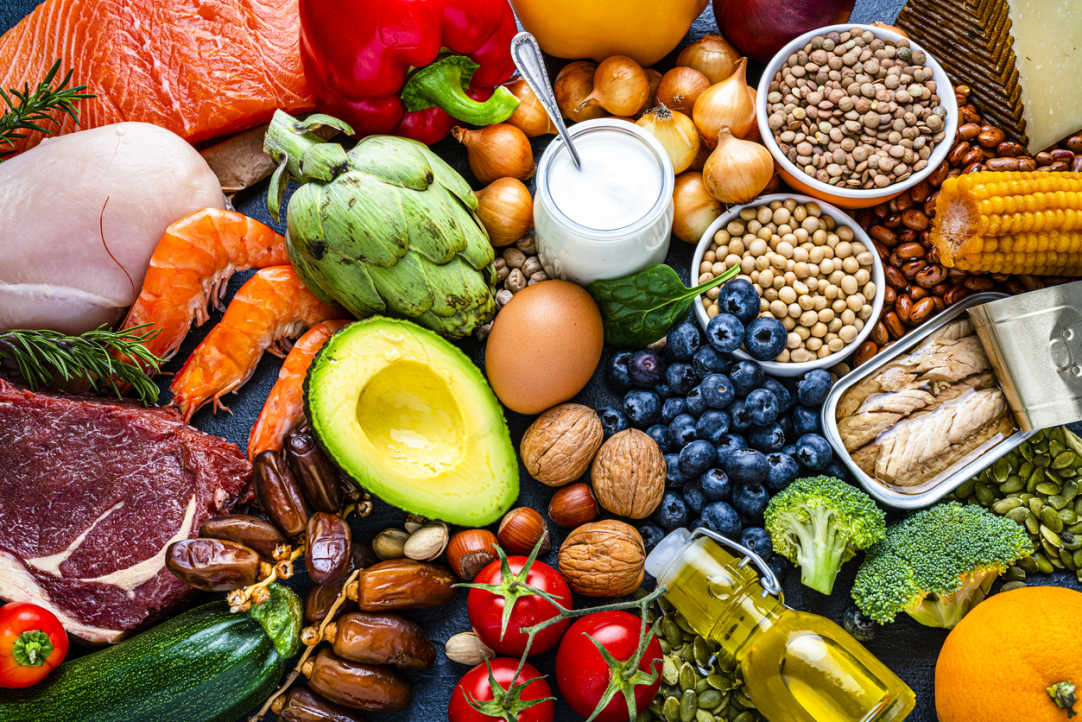
In Russia, the annual cost of treating type 2 diabetes alone exceeds 500 billion roubles. Promoting healthy nutrition programmes can ease the burden on the healthcare system and increase life expectancy. This was the conclusion reached by economists at HSE University after analysing global experiences with government involvement in promoting a healthy lifestyle.
An unbalanced diet and nutritional disorders, whether due to malnutrition or overeating, cause harm to health and increase the burden on the healthcare system and social costs. According to the World Bank, low- and middle-income countries collectively lose up to $100 billion annually in medical costs and reduced productivity due to diseases linked to the consumption of substandard and unhealthy food. Similar issues are observed in Russia: a 2016 study found that the cost of treating type 2 diabetes alone, which develops in 70% of cases due to overeating and an imbalanced diet, amounts to nearly 1% of the annual GDP.
Assistant Professor at the HSE Faculty of Economic Sciences Natalia Khorkina, in collaboration with Research Fellow at the Laboratory of Public Sector Economic Research, HSE Centre for Basic Research, Kristina Chetaeva and bachelor's student at the HSE Faculty of Economic Sciences Alexandra Shpeko, analysed best practices of other countries in promoting healthy nutrition programmes and used the findings to develop recommendations for Russia.
There are three primary methods for increasing the popularity of healthy food consumption: educational initiatives, economic measures, and administrative regulation. Each of the methods can be applied both at the central and regional levels. According to the authors, the most effective approach is a combination of higher taxes on harmful products along with subsidies for both producers and consumers of healthy food. In Western European countries, the introduction of an excise tax of 10% to 20% on sugary carbonated drinks has led to a 12% to 15% reduction in their consumption, resulting in a $17 billion decrease in healthcare costs. In Mexico, implementing such a tax has resulted in savings of $4 for every dollar spent on administering the programme. In 2023, Russia introduced an excise tax on sugary drinks, leading to a twofold reduction in sugar content in many of these beverages.
Subsidising producers of healthy foods and encouraging the availability of nutritious options in the market can also be effective strategies. For example, Singapore has implemented a competitive support system for manufacturers. The country invested $35 million in the programme, distributing this amount among 100 companies. Subsequently, their products were featured in over 10,000 food and retail establishments. In 2022 alone, this initiative led to the preparation of over 200 million servings of food containing healthy ingredients. Additionally, providing support to specific population groups can be beneficial, such as subsidising hot lunches in schools and offering free meals to students from large families, orphans, and other vulnerable groups. Administrative measures can also produce positive outcomes. For example, in Gateshead, England, local authorities have prohibited the establishment of fast-food outlets near schools and in areas with high rates of childhood obesity. As a result, the proportion of public catering establishments offering junk food in the town decreased by 14% over four years. In Los Angeles, measures to ban new fast-food outlets resulted in a 3% reduction in obesity rates and a 2% decrease in diabetes rates within seven years of the ban. Many Latin American countries have implemented food labelling that highlights high calorie content and the associated health risks of consuming these products. In Chile, up to 50% of the population altered their eating habits following the introduction of such labelling, while in Uruguay, the consumption of sugary carbonated drinks dropped by 24%.

Kristina Chetaeva
Such nudging measures have proven highly effective and could be implemented in Russia as well. According to the authors, one effective method could be the ‘traffic light’ labelling system. It uses color-coded labels to inform customers about the nutritional content and health impact of products: red for harmful, green for beneficial, and yellow for products with mixed properties. 'This is an effective and intuitive method for helping people make informed decisions about the food they buy, which is especially crucial for young people whose eating habits are still developing. For example, studies conducted in Ecuador have shown that this labelling system can encourage children and adolescents to choose healthier foods. Scientists in Japan observed a significantly healthier selection of dishes by students after implementing traffic light-style labels on the dinner menu. In Russia, the traffic light labelling is still optional and not very common,' comments Kristina Chetaeva, Research Fellow at the Laboratory of Public Sector Economic Research, HSE Centre for Basic Research.

Natalia Khorkina
Many of these measures are already in place in Russia. For example, a reduced VAT rate of 10% is applied to healthy foods such as meat, dairy products, vegetables, and berries, while the VAT rate for fast food has been increased to 20%. In 2024, up to 8 billion roubles will be allocated for subsidies to farms. Nevertheless, the researchers recommend maintaining and expanding policies that promote healthy eating. 'Subsidies for sellers of healthy foods, additional funding for school hot lunches, and benefits for employers who offer balanced diets to their employees could serve as key tools for promoting healthy eating in Russia. Additionally, it is important to continue differentiating indirect taxes on specific food groups, following the model of the excise tax on sugary carbonated drinks introduced in 2023, and to make the product labelling system more accessible and understandable. Such a policy could lead to a significant reduction in the burden on the healthcare system,' according to Natalia Khorkina, Assistant Professor at the HSE Faculty of Economic Sciences.
See also:

Scientists Discover Why Parents May Favour One Child Over Another
An international team that included Prof. Marina Butovskaya from HSE University studied how willing parents are to care for a child depending on the child’s resemblance to them. The researchers found that similarity to the mother or father affects the level of care provided by parents and grandparents differently. Moreover, this relationship varies across Russia, Brazil, and the United States, reflecting deep cultural differences in family structures in these countries. The study's findings have been published in Social Evolution & History.
When a Virus Steps on a Mine: Ancient Mechanism of Infected Cell Self-Destruction Discovered
When a virus enters a cell, it disrupts the cell’s normal functions. It was previously believed that the cell's protective response to the virus triggered cellular self-destruction. However, a study involving bioinformatics researchers at HSE University has revealed a different mechanism: the cell does not react to the virus itself but to its own transcripts, which become abnormally long. The study has been published in Nature.
Researchers Identify Link between Bilingualism and Cognitive Efficiency
An international team of researchers, including scholars from HSE University, has discovered that knowledge of a foreign language can improve memory performance and increase automaticity when solving complex tasks. The higher a person’s language proficiency, the stronger the effect. The results have been published in the journal Brain and Cognition.
Artificial Intelligence Transforms Employment in Russian Companies
Russian enterprises rank among the world’s top ten leaders in AI adoption. In 2023, nearly one-third of domestic companies reported using artificial intelligence. According to a new study by Larisa Smirnykh, Professor at the HSE Faculty of Economic Sciences, the impact of digitalisation on employment is uneven: while the introduction of AI in small and large enterprises led to a reduction in the number of employees, in medium-sized companies, on the contrary, it contributed to job growth. The article has been published in Voprosy Ekonomiki.
Lost Signal: How Solar Activity Silenced Earth's Radiation
Researchers from HSE University and the Space Research Institute of the Russian Academy of Sciences analysed seven years of data from the ERG (Arase) satellite and, for the first time, provided a detailed description of a new type of radio emission from near-Earth space—the hectometric continuum, first discovered in 2017. The researchers found that this radiation appears a few hours after sunset and disappears one to three hours after sunrise. It was most frequently observed during the summer months and less often in spring and autumn. However, by mid-2022, when the Sun entered a phase of increased activity, the radiation had completely vanished—though the scientists believe the signal may reappear in the future. The study has been published in the Journal of Geophysical Research: Space Physics.
Banking Crises Drive Biodiversity Loss
Economists from HSE University, MGIMO University, and Bocconi University have found that financial crises have a significant negative impact on biodiversity and the environment. This relationship appears to be bi-directional: as global biodiversity declines, the likelihood of new crises increases. The study examines the status of populations encompassing thousands of species worldwide over the past 50 years. The article has been published in Economics Letters, an international journal.
Scientists Discover That the Brain Responds to Others’ Actions as if They Were Its Own
When we watch someone move their finger, our brain doesn’t remain passive. Research conducted by scientists from HSE University and Lausanne University Hospital shows that observing movement activates the motor cortex as if we were performing the action ourselves—while simultaneously ‘silencing’ unnecessary muscles. The findings were published in Scientific Reports.
Russian Scientists Investigate Age-Related Differences in Brain Damage Volume Following Childhood Stroke
A team of Russian scientists and clinicians, including Sofya Kulikova from HSE University in Perm, compared the extent and characteristics of brain damage in children who experienced a stroke either within the first four weeks of life or before the age of two. The researchers found that the younger the child, the more extensive the brain damage—particularly in the frontal and parietal lobes, which are responsible for movement, language, and thinking. The study, published in Neuroscience and Behavioral Physiology, provides insights into how age can influence the nature and extent of brain lesions and lays the groundwork for developing personalised rehabilitation programmes for children who experience a stroke early in life.
Scientists Test Asymmetry Between Matter and Antimatter
An international team, including scientists from HSE University, has collected and analysed data from dozens of experiments on charm mixing—the process in which an unstable charm meson oscillates between its particle and antiparticle states. These oscillations were observed only four times per thousand decays, fully consistent with the predictions of the Standard Model. This indicates that no signs of new physics have yet been detected in these processes, and if unknown particles do exist, they are likely too heavy to be observed with current equipment. The paper has been published in Physical Review D.
HSE Scientists Reveal What Drives Public Trust in Science
Researchers at HSE ISSEK have analysed the level of trust in scientific knowledge in Russian society and the factors shaping attitudes and perceptions. It was found that trust in science depends more on everyday experience, social expectations, and the perceived promises of science than on objective knowledge. The article has been published in Universe of Russia.