

Scientists Find Out Why Aphasia Patients Lose the Ability to Talk about the Past and Future
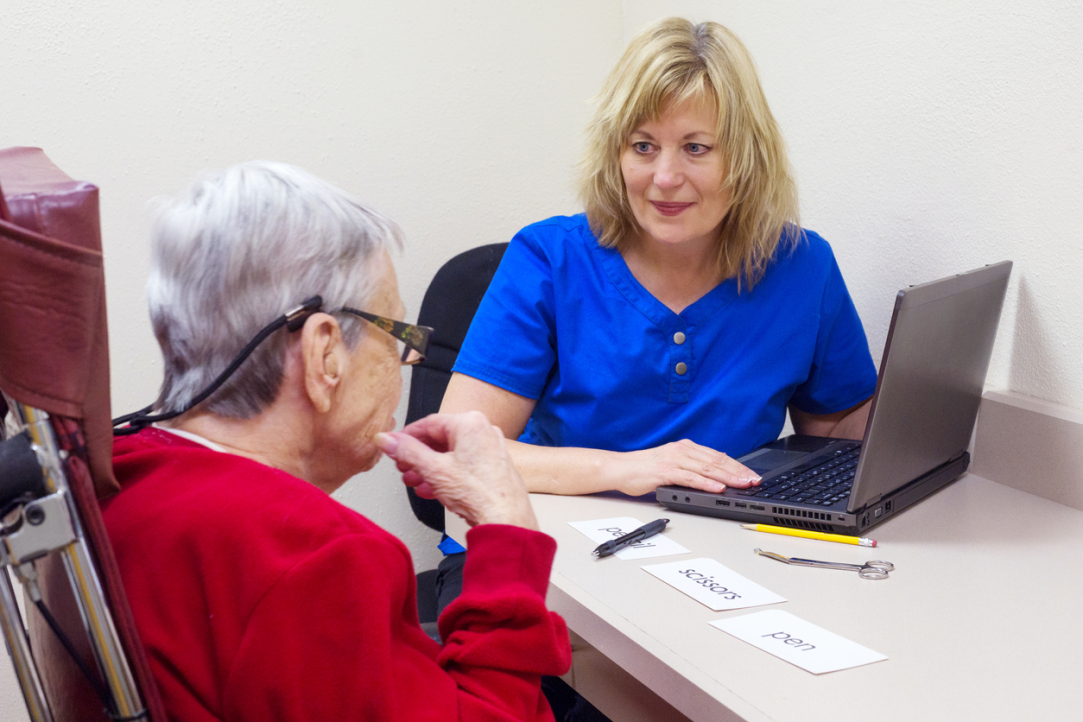
An international team of researchers, including scientists from the HSE Centre for Language and Brain, has identified the causes of impairments in expressing grammatical tense in people with aphasia. They discovered that individuals with speech disorders struggle with both forming the concept of time and selecting the correct verb tense. However, which of these processes proves more challenging depends on the speaker's language. The findings have been published in the journal Aphasiology.
Aphasia is a severe speech disorder, often resulting from a stroke, in which individuals lose the ability to speak coherently. In particular, this can manifest as incorrect use of verb tenses, making it difficult for patients to talk about past or future events, significantly complicating everyday communication.
To investigate the origins of these difficulties, researchers from universities in Russia, Greece, Italy, the US, and Norway conducted an experiment. They hypothesised that tense expression impairments could stem from two distinct processes: encoding and retrieval. During encoding, a speaker forms the concept of time (for example, whether an action occurred in the past, present, or future). During retrieval, they select the correct verb form to express that concept. To understand the impact of each process, the scientists carried out experiments with aphasia patients speaking four different languages: Greek, Russian, Italian, and English. These languages were chosen because they structure verb tenses differently, allowing the researchers to examine how language-specific features influence encoding and retrieval of tense in aphasia patients.
To aid in diagnosis, the researchers designed two sentence-completion tasks. The first task asked participants to fill in blanks in sentences, requiring both processes—encoding and retrieval. They had to complete the sentence according to the model, considering the change in the tense form of the verb. For example: ‘Yesterday, the gardener watered the flowers. Tomorrow, the gardener will... the flowers.’ The second tasks expected participants to complete sentences without changing the verb tense. They were given the phrase ‘to water the plants’ and heard the example sentence ‘The gardener is currently collecting mushrooms.’ Then they were then prompted to begin a sentence with ‘The gardener is currently...’ and complete it with the phrase ‘watering the plants’ in the correct form, resulting in ‘is watering the plants.’
By comparing the results from these tasks, the researchers could determine whether the primary difficulties arose during encoding or retrieval.
The study revealed that most participants experienced impairments in both encoding and retrieval, but the severity of these issues varied depending on the language and the individual. For instance, Russian- and English-speaking participants struggled more with the retrieval task, while Greek- and Italian-speaking participants faced challenges primarily during encoding. Interestingly, difficulties in expressing time were selective. Some patients had trouble referencing the past, while others struggled with the future.

‘These findings are crucial for understanding how aphasia patients lose the ability to express time differently, depending on the characteristics of their language,’ explained Olga Buivolova, Research Fellow at the HSE Centre for Language and Brain and one of the study’s authors. ‘We can now better evaluate which aspects of time pose the greatest challenges for patients and begin developing more tailored therapeutic approaches.’
As researchers note, the main conclusions of the study may also have practical implications for neurorehabilitation. Firstly, this experimental method can help identify the underlying causes of difficulties with using verb tenses. This means that speech therapists and neuropsychologists will be able to work more thoroughly and effectively with patients on speech recovery.
Secondly, the study helps to understand how differences between languages can affect the symptoms of aphasia. This is important for developing standardised tests and methods that consider the specifics of a speaker's native language, ultimately leading to more accurate and comprehensive diagnosis of patients with aphasia.
See also:

When a Virus Steps on a Mine: Ancient Mechanism of Infected Cell Self-Destruction Discovered
When a virus enters a cell, it disrupts the cell’s normal functions. It was previously believed that the cell's protective response to the virus triggered cellular self-destruction. However, a study involving bioinformatics researchers at HSE University has revealed a different mechanism: the cell does not react to the virus itself but to its own transcripts, which become abnormally long. The study has been published in Nature.
Researchers Identify Link between Bilingualism and Cognitive Efficiency
An international team of researchers, including scholars from HSE University, has discovered that knowledge of a foreign language can improve memory performance and increase automaticity when solving complex tasks. The higher a person’s language proficiency, the stronger the effect. The results have been published in the journal Brain and Cognition.
Artificial Intelligence Transforms Employment in Russian Companies
Russian enterprises rank among the world’s top ten leaders in AI adoption. In 2023, nearly one-third of domestic companies reported using artificial intelligence. According to a new study by Larisa Smirnykh, Professor at the HSE Faculty of Economic Sciences, the impact of digitalisation on employment is uneven: while the introduction of AI in small and large enterprises led to a reduction in the number of employees, in medium-sized companies, on the contrary, it contributed to job growth. The article has been published in Voprosy Ekonomiki.
Lost Signal: How Solar Activity Silenced Earth's Radiation
Researchers from HSE University and the Space Research Institute of the Russian Academy of Sciences analysed seven years of data from the ERG (Arase) satellite and, for the first time, provided a detailed description of a new type of radio emission from near-Earth space—the hectometric continuum, first discovered in 2017. The researchers found that this radiation appears a few hours after sunset and disappears one to three hours after sunrise. It was most frequently observed during the summer months and less often in spring and autumn. However, by mid-2022, when the Sun entered a phase of increased activity, the radiation had completely vanished—though the scientists believe the signal may reappear in the future. The study has been published in the Journal of Geophysical Research: Space Physics.
Banking Crises Drive Biodiversity Loss
Economists from HSE University, MGIMO University, and Bocconi University have found that financial crises have a significant negative impact on biodiversity and the environment. This relationship appears to be bi-directional: as global biodiversity declines, the likelihood of new crises increases. The study examines the status of populations encompassing thousands of species worldwide over the past 50 years. The article has been published in Economics Letters, an international journal.
Scientists Discover That the Brain Responds to Others’ Actions as if They Were Its Own
When we watch someone move their finger, our brain doesn’t remain passive. Research conducted by scientists from HSE University and Lausanne University Hospital shows that observing movement activates the motor cortex as if we were performing the action ourselves—while simultaneously ‘silencing’ unnecessary muscles. The findings were published in Scientific Reports.
Russian Scientists Investigate Age-Related Differences in Brain Damage Volume Following Childhood Stroke
A team of Russian scientists and clinicians, including Sofya Kulikova from HSE University in Perm, compared the extent and characteristics of brain damage in children who experienced a stroke either within the first four weeks of life or before the age of two. The researchers found that the younger the child, the more extensive the brain damage—particularly in the frontal and parietal lobes, which are responsible for movement, language, and thinking. The study, published in Neuroscience and Behavioral Physiology, provides insights into how age can influence the nature and extent of brain lesions and lays the groundwork for developing personalised rehabilitation programmes for children who experience a stroke early in life.
Scientists Test Asymmetry Between Matter and Antimatter
An international team, including scientists from HSE University, has collected and analysed data from dozens of experiments on charm mixing—the process in which an unstable charm meson oscillates between its particle and antiparticle states. These oscillations were observed only four times per thousand decays, fully consistent with the predictions of the Standard Model. This indicates that no signs of new physics have yet been detected in these processes, and if unknown particles do exist, they are likely too heavy to be observed with current equipment. The paper has been published in Physical Review D.
HSE Scientists Reveal What Drives Public Trust in Science
Researchers at HSE ISSEK have analysed the level of trust in scientific knowledge in Russian society and the factors shaping attitudes and perceptions. It was found that trust in science depends more on everyday experience, social expectations, and the perceived promises of science than on objective knowledge. The article has been published in Universe of Russia.
Scientists Uncover Why Consumers Are Reluctant to Pay for Sugar-Free Products
Researchers at the HSE Institute for Cognitive Neuroscience have investigated how 'sugar-free' labelling affects consumers’ willingness to pay for such products. It was found that the label has little impact on the products’ appeal due to a trade-off between sweetness and healthiness: on the one hand, the label can deter consumers by implying an inferior taste, while on the other, it signals potential health benefits. The study findings have been published in Frontiers in Nutrition.